Prohibited food items on plane

Gambar Profil Penulis

Food restrictions exist to protect passenger safety, maintain hygiene on board, and prevent the spread of pests and diseases across borders. Foods that spoil easily, have strong smells, or contain liquids may cause issues during flights, while agricultural products such as fresh fruits, vegetables, and meat can introduce harmful pests or bacteria into another country.

Because of these risks, airports and governments enforce rules that control what type of food can be brought on the plane and what can be carried into a foreign country. These rules are not the same everywhere. Different airlines, airports, and destinations apply their own regulations. For this reason, Malaysian travellers should always check the latest guidelines before packing food for international travel.

🔥 Hotel Coupons: Exclusive Hotels Deal for New Users

Discover the world with trip.com! Book the perfect hotel anywhere in the world and get an unbeatable 10% discount if you're a first-time user! If this is your second time using it, you will receive a 5% discount! Download our app now and start planning your next trip with ease.

Just click this link and download the Trip.com App, after successfully registering as a member, use it when you place an order!

🔥Save More with Up to 10% Off

Use our promo code to enjoy up to 10% OFF on your attraction tickets, tours and eSIMs! There is also a 5% OFF for new users!
🔥New User Coupon: Save More with an Extra 5% Off

Use our promo code to enjoy an extra 5% off on your attraction tickets, eSIMs, and tours! ⏳Redeem within 3 days of claiming

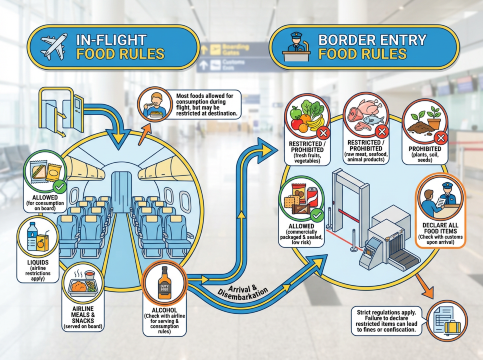
Understanding the Difference: In-Flight Rules vs. Border Entry Rules

Food Rules

Food Rules

Some foods are allowed on the plane during the flight but are not allowed to enter a foreign country after landing. This is because airlines focus on safety and security inside the aircraft, while customs authorities focus on protecting agriculture and the environment in their own country. Airline rules mainly involve liquids, gels, and food safety during the flight. Border rules deal with quarantine, pests, and diseases that could come from food items carried by travellers.

Below is a simple breakdown:

Category

In-Flight Rules

Border Entry Rules

Purpose

Passenger safety and hygiene

Protect crops, animals, and the environment

Authority

Airport security & airlines

Customs & quarantine officers

Focus

Liquids, gels, smells, food handling

Agricultural risks, pests, diseases

Main Concern

Safety and comfort on board

Biosecurity and contamination

Different by Country

Mostly similar worldwide

Very different between countries

Examples of How the Rules Apply

Food Type

On the Plane (In-Flight)

At Destination (Border Entry)

Dry snacks (biscuits, chips)

Usually allowed

Usually allowed

Liquids (soups, sambal, curry)

Restricted if over 100ml

May be allowed but must be declared

Fresh fruits & vegetables

Usually allowed in flight

Often banned or must be declared

Meat & dairy products

Allowed if sealed and within airline rules

Often banned or high-risk for quarantine

Strong-smelling foods (durian, etc.)

Sometimes restricted by airline

Depends on country rules, often must declare

In short, airline rules affect what you can bring onto the plane, while border rules affect what you can bring into the country. Malaysian travellers should check both sets of rules to avoid problems during security checks or at customs.

🔥Malaysia Airlines Flight Deals- Limited Time Sale

Plan & Book Your Next Holiday on Trip.com, your travel one-stop-shop.
Enjoy Discounted Fares Across All Malaysia Airlines Destinations

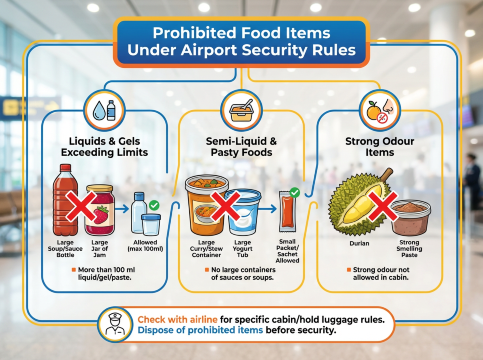
Prohibited Food Items Under Airport Security Rules

禁带食品

At airport security checkpoints, many food items are restricted because they fall under the liquid and gel rules. Any liquid or semi-liquid food over 100ml is not allowed in carry-on baggage. This includes items such as curries, sauces, soups, yogurt, beverages, and similar products. These rules exist because liquids are regulated for safety reasons, as part of international aviation security standards.

Examples of Restricted Food Items

Category

Examples

Allowed in Carry-On?

Liquid/Semi-liquid Foods

Curries, sauces, gravies, sambal

Yes, only if each container is 100ml or less

Soups & Broths

Chicken broth, noodle soup, steamboat soup

No, unless under 100ml

Gel-like Foods

Jelly, yogurt, pudding

Yes, only if 100ml or less

Drinks & Beverages

Bottled water, herbal drinks, juices, tea, coffee

No, unless under 100ml

Liquid Pastes

Peanut butter, kaya, jam

Yes, only if 100ml or less

Why These Restrictions Exist

Reason

Explanation

Security Regulations

Liquids are controlled under global aviation safety rules.

Screening Limitations

Large volumes of liquids cannot be easily screened for harmful substances.

International Standard

Most airports worldwide follow the 100ml liquid rule for carry-on luggage.

Malaysian travellers should avoid packing large liquid or semi-liquid foods in their carry-on bags. If necessary, such items should be placed in checked baggage or kept within the 100ml limit to pass security smoothly.

🔥Go China

Travel to China! Get RM 120 OFF on Flight & Hotel!

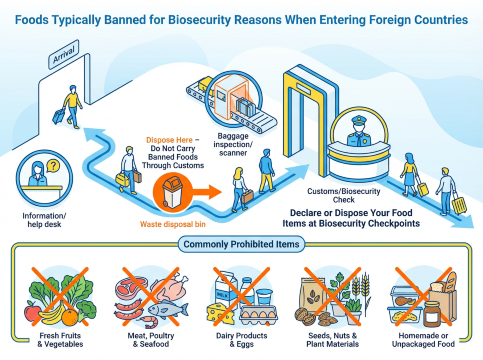
Foods Typically Banned for Biosecurity Reasons When Entering Foreign Countries

禁带食品图

Many countries such as Australia, New Zealand, Japan, and the United States enforce strict rules on certain food items because they can carry pests, bacteria, or diseases that may harm local farms, animals, and the environment. These biosecurity rules often apply to fresh produce, raw animal products, and any items that can sprout or introduce soil into a new ecosystem. Travellers must follow these rules to avoid fines or confiscation.

Common Food Items Banned or Restricted at Borders

Food Category

Examples

Reason for Restriction

Fresh Fruits & Vegetables

Apples, bananas, mangoes, chillies

May carry insects, pests, or plant diseases

Fresh Meat, Poultry & Seafood

Raw chicken, beef, fish, shellfish

Risk of animal diseases or contamination

Eggs & Dairy Products

Eggs, cheese, fresh milk

May contain harmful bacteria or viruses

Seeds, Nuts & Grains That Can Sprout

Raw peanuts, rice, beans, seeds

Can introduce foreign plant species or pests

Soil-Contaminated Items

Root vegetables, unwashed produce, packaging with soil

Soil can carry microbes, bugs, and plant pathogens

Why Biosecurity Restrictions Exist

Biosecurity Concern

Explanation

Pests

Insects and larvae can damage crops and agriculture

Bacteria

Some foods can carry harmful bacteria like Salmonella

Plant Diseases

Certain plant viruses and fungi spread through produce

Animal Diseases

Meat and eggs can carry diseases affecting livestock

Environmental Protection

Prevents damage to local ecosystems and food supply

In short, these rules protect the destination country’s agriculture and environment. Malaysian travellers should always check border guidelines and declare restricted food items when entering another country.

🔥Hello Vietnam- Summer is Calling!

Discover a land of vibrant culture, breathtaking landscapes, and unforgettable flavors - your perfect summer journey starts here, now with exclusive deals upto 50% for flight, hotel, attraction, tickets and more, only on Trip.com. Explore now! ✨


Processed and Packaged Foods: What Is Usually Allowed or Restricted

Food Rules.

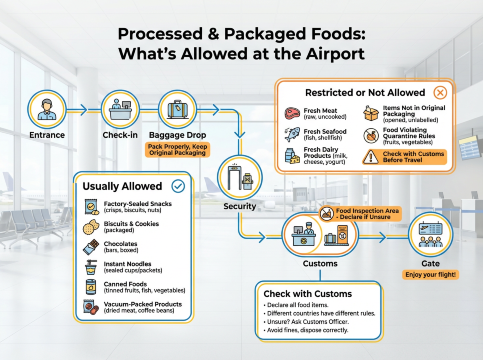
Commercially processed and packaged foods such as biscuits, chocolates, chips, and instant noodles are usually allowed to be carried into many countries because they are sealed and less likely to carry pests or bacteria. However, some processed foods still require declaration, especially if they contain dairy, meat, or other animal products. Rules differ by country, so travellers should always check and declare when in doubt.

Examples of Commonly Allowed Packaged Foods

Food Type

Examples

Usually Allowed?

Notes

Dry Snacks

Biscuits, chips, crackers

Yes

Must be sealed in original packaging

Confectionery

Chocolates, candy, sweets

Yes

Usually safe to bring

Instant Meals

Instant noodles, cup noodles

Yes

Check if seasoning contains meat or dairy

Breakfast Items

Cereal bars, oats packets

Yes

Declare if unsure

Items That May Need Declaration or May Be Restricted

Food Type

Examples

Reason

Meat-Based Products

Jerky, canned meat, meat seasoning packets

Contains animal products

Dairy-Based Snacks

Cheese snacks, milk candy, powdered milk

Contains dairy which may be restricted

Seafood Snacks

Dried fish, seaweed with seafood seasoning

May require inspection or declaration

Mixed Packaged Foods

Ready-to-eat meal packs

Ingredients must be checked for meat/dairy

Packaged snacks are generally safe to bring, but products containing dairy, meat, or seafood may need to be declared depending on the destination country’s rules.

🔥Last Minute Hotel & Travel Deals in Malaysia

Last minute travel deals up to 30% OFF!

Popular Malaysian Foods Travellers Should Be Careful With

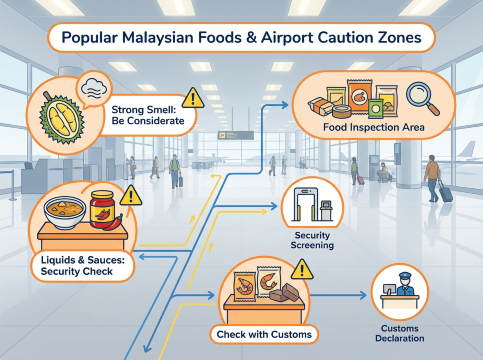
Malaysian travellers should be cautious when carrying certain local foods abroad because they may fall under liquid restrictions, require declaration, or be banned for biosecurity reasons. Items such as sambal, laksa paste, and curry paste are often treated as liquids or gels and may also contain meat or seafood. Dried seafood items like ikan bilis may need to be declared, and fresh tropical fruits such as durian or rambutan can be restricted depending on the destination. Home-cooked meals containing meat or vegetables are often not allowed into many countries. It is also important to note that durian is sometimes banned on planes due to its strong smell, not because of customs rules.

Malaysian Foods to Be Careful With

Food Category

Examples

Possible Issue

Liquid or Paste Foods

Sambal, laksa paste, curry paste

Treated as liquids/gels; may exceed 100ml; may contain meat/seafood

Dried Seafood

Ikan bilis, dried shrimp, dried cuttlefish

May require declaration; biosecurity inspection

Fresh Tropical Fruits

Durian, mangosteen, rambutan

May be restricted at border; depends on country rules

Home-Cooked Meals

Rice dishes with meat, vegetables, curries

Usually not allowed due to meat/plant ingredients

Additional Foods

Item

Special Consideration

Durian

Sometimes banned on planes due to strong smell, not customs

Meat/Seafood Ingredients

Often trigger declaration or inspection requirements

Vegetable/Fruit Content

May be banned for biosecurity reasons

So, travellers should check the rules of their destination and declare food items when required to avoid fines or confiscation.

🔥Go Japan

Travel to Japan, get promo code now!

Declaration Requirements and Customs Forms

Custom Declaration Counter

Many countries require travellers to declare any food items upon arrival by completing a customs form or answering questions at the border. This helps authorities check whether the items are safe and allowed into the country. Failure to declare food items can result in penalties such as confiscation, fines, or other enforcement actions. For this reason, Malaysian travellers are encouraged to declare food items if they are unsure, rather than risk being fined for undeclared goods.

Declaration Rules Overview

Requirement

Explanation

Declaration Needed

Many countries ask travellers to declare food at arrival

Customs Forms

Forms may be digital or paper, depending on the airport

Border Inspection

Declared items may be checked by customs officers

Possible Penalties for Not Declaring

Penalty Type

Description

Confiscation

Food items may be taken and destroyed

Fines

Monetary fines may be issued for undeclared items

Enforcement Action

Repeat or serious violations may lead to further action

Recommendation for Travellers

Guidance

Reason

Declare if unsure

Avoid fines and comply with border rules

Check rules in advance

Different countries have different biosecurity policies

Keep items visible

Helps with inspection and speeds up clearance

Declaring food items is the safest option, as it prevents unnecessary penalties and ensures a smooth arrival process for Malaysian travellers.

🔥Fly with AirAsia

Fly with AirAsia! Flights promo code up to RM80 OFF!

Airline-Specific Restrictions

Some airlines do not allow strong-smelling foods or messy dishes during flights because they can disturb other passengers and create hygiene issues in the cabin. For this reason, any food carried on board should be clean, dry, and odour-controlled. This ensures a more comfortable and safe environment for everyone during the flight.

Airline Restrictions Overview

Category

Examples

Reason

Strong-Smelling Foods

Durian, fermented dishes, strong spices

Can disturb passengers and crew

Messy or Liquid Dishes

Curry, soup, saucy meals

Risk of spills and hygiene issues

Hot Meals from Home

Nasi berlauk, laksa, soupy noodles

Difficult to store and may leak

Recommended Foods for Carry-On

Food Type

Characteristics

Dry Snacks

Clean, minimal smell, easy to pack

Packaged Items

Sealed and safe for storage

Non-Perishable Foods

Low risk of leakage or spoilage

Basic Guidelines for Travellers

Guidance

Explanation

Keep food odour-controlled

Prevent discomfort to nearby passengers

Choose clean and dry foods

Reduce hygiene and spill risks

Follow airline instructions

Policies may differ by airline

Travellers should choose appropriate foods for carry-on to maintain courtesy, comfort, and safety during their flight.

🔥Up to 20% OFF on New Hotels

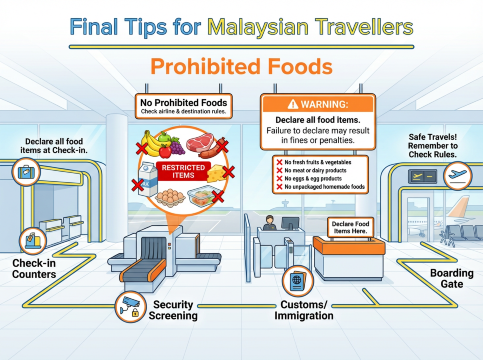
Final Tips for Malaysian Travellers

Malaysian travellers can avoid problems at airports and borders by following simple food-related guidelines. Dry snacks should be packed in their original sealed packaging, and travellers should avoid bringing fresh produce, meat, or dairy unless they are sure it is allowed. It is important to check customs rules before flying, especially when visiting strict destinations such as Australia and New Zealand. Food items should be declared when required, and liquids or sauces carried in cabin baggage must be 100ml or below. By understanding these rules and planning ahead, travellers can prevent fines, confiscation, or delays and enjoy a smooth, stress-free journey.

Practical Tips for Malaysian Travellers

Tip

Reason

Pack dry snacks in sealed packaging

Clean, safe, and usually allowed

Avoid fresh produce, meat, or dairy

High biosecurity risk in many countries

Check destination customs rules

Different countries have different restrictions

Declare food items when required

Prevents fines and confiscation

Keep liquids and sauces under 100ml

Follows airport security liquid rules

Travel Preparation Checklist

Checklist Item

Food packed in sealed packaging

No restricted fresh produce or meat

Customs rules checked for destination

Declaration form ready if needed

Liquids/sauces under 100ml

Final Notes for a Smooth Trip

Guidance

Benefit

Understand food restrictions

Avoids penalties and delays

Plan ahead before packing food

Ensures compliance with airline and border rules

When unsure, declare

Safer than risking fines

In conclusion, knowing and following food restrictions helps Malaysian travellers avoid unnecessary stress at airports and borders, allowing them to travel smoothly and confidently.

🔥Popular Attractions Around the World Deal

Discover the world's popular attractions, theme parks, and activities! Enjoy extra savings up to RM70 OFF for selected products!

Frequently Asked Questions (FAQs): Prohibited food items on plane

Disclaimer: This article has been provided by an individual contributor or third party platform. If there is any discrepancy regarding the copyright, please contact us directly and we will delete the content immediately.
Sakura

Sakura

Travel Writer

Lihat profil

She is a passionate writer who enjoys creating simple, helpful, and easy-to-understand content. With a strong interest in travel and practical guides, she aims to share useful information that helps readers plan better and travel with confidence. Through clear and straightforward writing, she hopes to make every journey feel less complicated and more enjoyable.

140 artikel
Travel
> >
Prohibited food items on plane