Flying with Liquids: Rules, Limits & Packing Tips

Have you ever felt unsure and wondered, “Is this liquid allowed in my carry-on?” or “Is it safe to put this in my checked baggage?” when preparing to board a flight? It's important to know that the rules for carrying liquids on a plane differ between domestic and international flights.
In this article, we’ve compiled a complete guide on the regulations for bringing liquids on board, whether you’re flying within Malaysia or travelling abroad. Be sure to read it through so you can enjoy a worry-free journey.
Liquids Allowed in Cabin Baggage for International Flights

Basic Guidelines: Rules for Carrying Liquids in Cabin Baggage on International Flights
When travelling internationally, strict regulations apply to carrying liquids in your cabin baggage. Here are the three main rules you must follow:
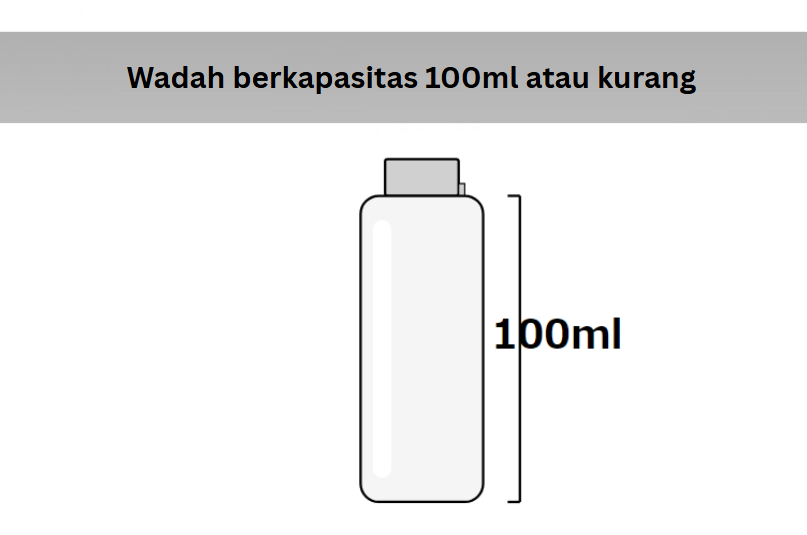
- All liquids, gels, and aerosols must be stored in containers with a maximum capacity of 100 ml each.
- These containers must be placed in a single, transparent, resealable plastic bag with a total capacity not exceeding 1 litre.
- Each passenger is allowed to carry only one such plastic bag.
These rules are set by the International Civil Aviation Organization (ICAO) and are enforced in many countries and regions around the world.
What Does “100 ml or Less per Container” Mean?
“100 ml or less per container” refers to the maximum capacity of the container itself, not the amount of liquid inside it. Even if the contents are minimal, containers larger than 100 ml are not permitted in cabin baggage.
Examples:
- A 150 ml bottle containing only 50 ml of liquid → ❌ Not Allowed
- A 100 ml bottle that is full → ✅ Allowed
In short, what matters is the size of the container, not the quantity of liquid inside.
Containers with a Capacity Below 100 ml
This means that the labelled capacity on each container must be 100 ml or less. Even if the actual content inside is below 100 ml, containers that exceed the 100 ml capacity are not allowed in cabin baggage.
In addition, if you are carrying multiple containers, each individual container must have a maximum capacity of 100 ml or less.
Examples of Liquids, Gels, and Aerosols Covered by This Rule Include:
- Drinking water, juice, alcoholic beverages
- Facial lotions, emulsions, beauty serums, creams
- Perfume, cologne
- Shampoo, conditioner, liquid soap
- Toothpaste, shaving cream
- Gel-based products (such as hair gel, body gel, etc.)
- Aerosol products (spray cans)
Make sure all these items are placed in a single transparent, resealable plastic bag (maximum 1 litre in total capacity) before you proceed through airport security.
What Is a Transparent Resealable Plastic Bag with a Maximum Capacity of 1 Litre?
A transparent resealable plastic bag used to carry liquids in cabin baggage must have a maximum capacity of 1 litre. As a general guideline, a suitable bag typically measures no more than 20 cm in both height and width.
You may use a transparent zip-lock plastic bag commonly sold at supermarkets or pharmacies, such as those designed for food storage.
Each passenger is only allowed to carry one transparent resealable plastic bag in their cabin baggage. Even when travelling as a family or in a group, each person must prepare and carry their own individual bag.
What Are the Rules for Carrying Liquids Purchased from Duty-Free Shops?

Liquids such as alcoholic beverages, cosmetics, perfumes, and other items purchased from duty-free shops in the international departure area may be brought into the aircraft cabin. However, there are several important things to keep in mind:
Place and Time of Purchase
Liquids purchased at duty-free shops located after the security screening and immigration checks at the airport can be brought into the cabin, even if they exceed the 100 ml limit.
However, this exemption does not apply if the item was purchased:
- At a city-based duty-free store before your departure, or
- At an airport duty-free shop before passing through security screening.
To be safe, always ensure you purchase duty-free liquids after the security check and confirm with the store staff whether the item is allowed in cabin baggage.
Transit Flights
If your journey includes a transit with another security screening, there is a risk that your duty-free liquid items may be confiscated. This is especially likely during international transits, as rules may vary between countries.
It is advisable to inform the duty-free staff that you have a transit stop and ask whether the liquid items you're purchasing can be brought onboard during transit.
As an alternative, consider:
- Buying liquid souvenirs from a duty-free shop at your transit airport, or
- Waiting until your final transit point is completed before making your purchase.
Packaging and Storage
Do not open the seal or tamper with the packaging of any liquid items purchased from duty-free shops. Opening the seal may result in the item being disallowed in the cabin.
During transit security checks, you may also be asked to show the purchase receipt. Always keep the receipt together with the product for easy reference.
By following these guidelines, you can avoid unnecessary issues and enjoy a smooth and stress-free journey.
Liquids Allowed on Domestic Flights in Malaysia
Regulations for carrying liquids on domestic flights are more relaxed compared to international flights. However, there are still certain restrictions you should be aware of.
Key Differences from International Flights
On domestic flights, passengers are not required to store liquids in 100 ml containers or place them in a special resealable plastic bag, as is mandatory for international travel.
Guidelines for Carrying Liquids
Liquids can be brought into the cabin on domestic flights within specific limits as outlined in the table below:
| Item | Carry-on (Cabin) | Checked Baggage | Conditions / Notes |
|---|---|---|---|
Drinks | ✔️ Allowed | ✔️ Allowed | Sealed PET bottles, reusable water bottles, and take-away coffee (with tight lids) |
Cosmetics & Non-Prescription Medicine | ✔️ Allowed | ✔️ Allowed | Maximum 500 ml or 0.5 kg per container. Total per passenger must not exceed 2 litres or 2 kg |
Hazardous Liquids | ❌ Not Allowed | ❌ Not Allowed | Items that are explosive, flammable, or otherwise dangerous are strictly prohibited |
Exceptions for Carrying Liquids on a Plane
Certain types of liquids are exempted from the standard cabin baggage restrictions and may be brought onboard under specific conditions. These items do not need to be placed in a 1-litre transparent resealable plastic bag, but must be declared during security screening.
1. Medication and Baby Supplies
The following items are allowed as exceptions:
- Medication: Prescription and over-the-counter medicine that is necessary during the journey
- Baby milk and baby food: In reasonable quantities needed if you are travelling with an infant or toddler
- Medical dietary food: Special meals or liquids required for medical conditions
2. Guidelines for Carrying Medication in Cabin Baggage
| Category | Details |
|---|---|
Quantity | Bring only the amount necessary for the trip. Excessive quantities may not be considered for personal use. |
Proof of Need | Carry a copy of the prescription or a doctor’s letter. This helps explain the need during security checks and is also advisable for international travel. |
Packaging | Keep the medication in its original packaging. Ensure the label shows the name and ingredients for verification. |
Declaration at Security | Inform security officers that the item is medication. This allows appropriate handling by the staff. |
Medications Requiring Refrigeration | Use proper cooling containers and declare them during inspection to ensure clearance. |
3. Cosmetics and Non-Prescription Medical Products
Items such as lotions, emulsions, creams, perfumes, and non-prescription health products like mouthwash must still follow the general liquid rule for international flights:
- Each item must be in a container of 100 ml or less
- All containers must fit inside a 1-litre transparent resealable plastic bag
Some products may have specific restrictions based on their alcohol content or active ingredients. If in doubt, always check with your airline beforehand.
By following these guidelines, you can ensure that essential items for your health and well-being are brought onboard safely and in compliance with aviation regulations.
Liquids on Flights: How to Handle Them?
Question 1: What if I forget to bring a transparent resealable plastic bag?
Answer:
For international flights, all liquids in containers of 100 ml or less must be placed in a transparent resealable plastic bag with a maximum capacity of 1 litre.
If you forget to bring this bag, the liquids generally cannot be brought into the cabin. If the bag is not available for purchase at the airport, you will need to either place the liquids in your checked luggage or discard them.
For domestic flights, this plastic bag is not required. Therefore, always ensure you pack one in advance if you're flying internationally.
Question 2: What about frozen items like ice or frozen juice?
Answer:
If, during security screening, the ice or juice is completely frozen, it is usually treated as a solid and may be allowed in the cabin—similar to items kept in a cooler.
However, if the frozen item has started to melt and is turning into liquid, it will then be subject to the liquid restrictions. For international flights, liquids exceeding 100 ml are not allowed in cabin baggage. It is recommended to ensure the item remains fully frozen, or otherwise, it must comply with liquid rules or be discarded.
Question 3: Do gel or cream-based cosmetics count as liquids?
Answer:
Yes. Under international aviation regulations, gel-based, cream-based, or paste-like products are all classified as liquids.
To bring them into the cabin on international flights, they must be:
- In containers no larger than 100 ml
- Stored in a transparent resealable plastic bag with a capacity of no more than 1 litre
This rule does not apply to domestic flights in Malaysia, where liquid restrictions are more relaxed.
Why Are There Restrictions on Carrying Liquids on a Plane?
The restrictions on carrying liquids onboard aircraft are implemented primarily for security reasons, particularly to prevent acts of terrorism. Liquids can potentially contain hazardous substances that are difficult to detect using standard screening equipment.
To ensure the safety of all passengers and crew, strict international regulations have been established regarding the quantity and manner in which liquids can be brought into the aircraft cabin. Even for domestic flights in Malaysia, the rules often follow, or closely align with, international aviation security standards. This helps maintain a consistent level of safety across all air travel.
Prepare Your Liquids Properly Before Flying!
The rules for carrying liquids on a plane differ between international and domestic flights, with stricter regulations applying to international travel.
However, by following the basic guideline—each liquid must be in a container not exceeding 100 ml, and all containers must fit into a single transparent resealable plastic bag with a maximum capacity of 1 litre per passenger—you can bring a reasonable amount of liquid onboard without issue.
To ensure a smooth security screening process at the airport, it is highly recommended to check the latest liquid regulations on your airline’s official website before departure. With proper preparation, you can enjoy a safe and comfortable flight experience!
Frequently Asked Questions About Carrying Liquids on a Plane
-
Are gels and creams considered liquids?
-
What about bottled drinks?
-
Can I bring frozen ice packs?
-
What about drinks purchased onboard the plane?