Planning a trip to South Korea in 2026? Understanding the country's public holidays will help you make the most of your visit. From the vibrant Lunar New Year (Seollal) to the festive Chuseok, South Korea’s holidays offer a unique chance to experience its rich traditions and culture. Whether you're joining in the celebrations or exploring local customs, this guide will help you plan a memorable trip.
1. Korea Public Holiday 2026 Overview ✨
South Korea’s public holidays in 2026 offer a unique opportunity to experience the country’s rich cultural heritage and vibrant traditions. These holidays are a mix of national celebrations, traditional observances, and solemn commemorations, allowing visitors to dive into the heart of Korean life. Key holidays include:
Cheap Flights to South Korea

2. Korea Public Holidays 2026 Calendar 🗓️
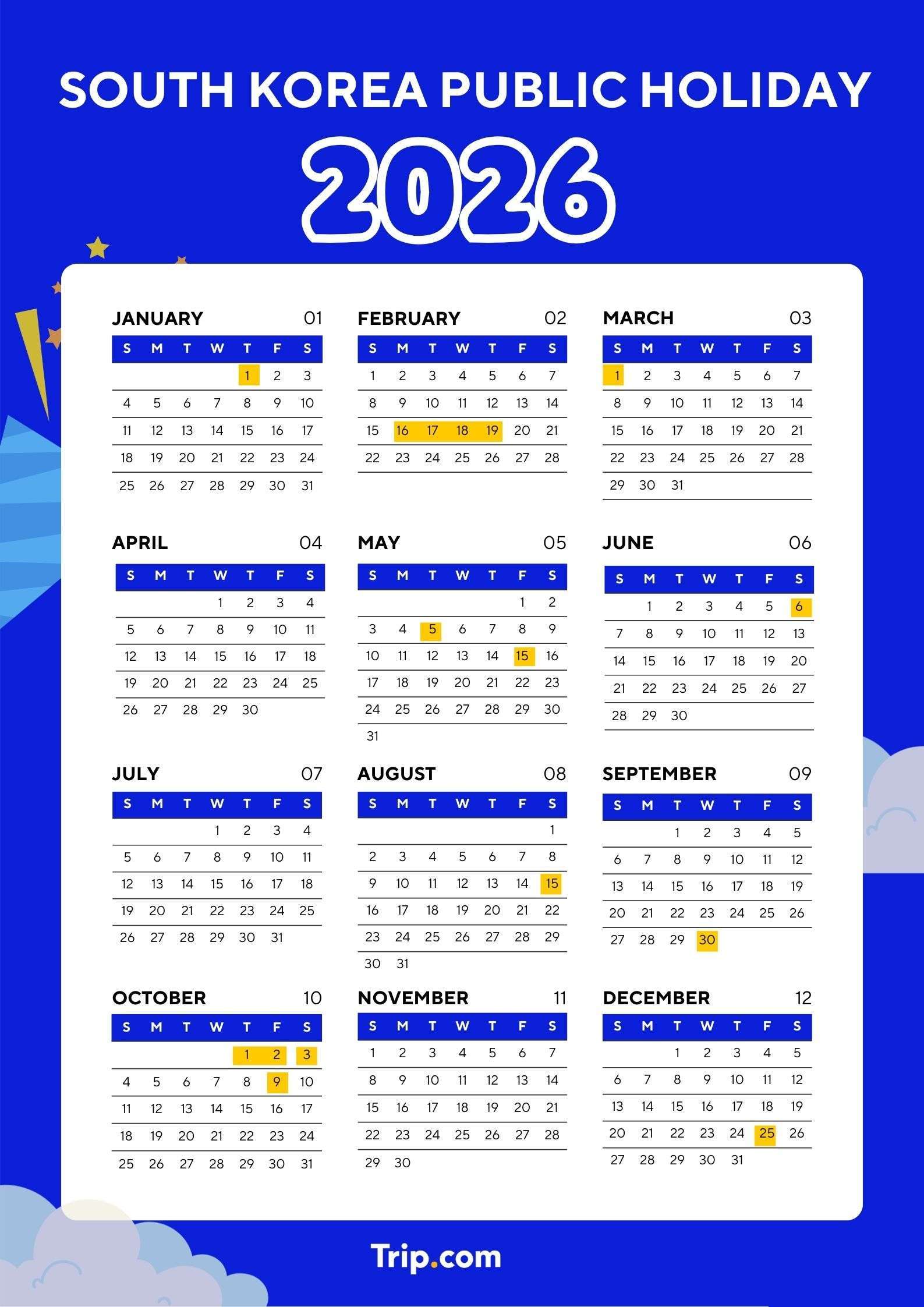
The following is a list of public holidays in Korea for 2026:
Date | Holiday | Duration | Description / Cultural Notes | Travel Impact |
Jan 1 (Thu) | New Year’s Day 🎆 | 1 day | Marks the start of the year. Locals often visit mountains or beaches for the first sunrise. | Light closures, busy sunrise spots. |
Feb 16–19 | Seollal (Lunar New Year) 🧧 | 4 days | Families gather for ancestral rites, games, and traditional meals. | Major closures, very high travel demand. |
Mar 1 (Sun) | Independence Movement Day 💫 | 1 day | Honors the 1919 uprising for independence. | Government offices closed; local ceremonies held. |
May 5 (Tue) | Children’s Day 👧👦 | 1 day | Families spend the day at parks, zoos, and theme parks. | Busy family attractions. |
May 15 (Fri) | Buddha’s Birthday 🕯️ | 1 day | Lanterns decorate temples across the country. | Temples crowded; reduced services elsewhere. |
Jun 6 (Sat) | Memorial Day 🕊️ | 1 day | A solemn day to remember fallen soldiers. | National ceremonies; partial closures. |
Aug 15 (Sat) | Liberation Day 🎉 | 1 day | Celebrates Korea’s independence in 1945. | Patriotic events; government offices closed. |
Sep 30–Oct 2 | Chuseok (Korean Thanksgiving) 🌕 | 3 days | Families honor ancestors and share traditional dishes. | Major closures; high travel activity. |
Oct 3 (Sat) | National Foundation Day 🏛️ | 1 day | Marks the founding of the Korean nation. | Government offices closed; cultural festivals. |
Oct 9 (Fri) | Hangeul Day ✍️ | 1 day | Celebrates the invention of the Korean alphabet. | Educational events; some closures. |
Dec 25 (Fri) | Christmas Day 🎄 | 1 day | Widely celebrated, especially in cities. |
Best Hotels in South Korea
 NO.1
NO.1

3. How Korea’s Public Holidays Can Affect Your Trip 🧳
Traveling during Korea’s public holidays can be a mixed experience depending on your preferences. Major holidays like Seollal and Chuseok often involve family-oriented activities, and many shops, restaurants, and attractions may be closed, particularly in more traditional areas. However, cities like Seoul remain lively, with special events, festivals, and parades.
Transportation can be crowded during these holidays, as many Koreans travel to their hometowns. For example, during Seollal and Chuseok, bus terminals and train stations can see massive traffic, leading to longer travel times.
If you’re planning a trip to Korea in 2026, be sure to check the specific dates of these holidays to adjust your itinerary accordingly. While some attractions may be closed, many other cultural experiences are enhanced during these times, offering travelers a chance to experience Korea's rich traditions up close.
4. Major Holidays and Cultural Highlights in Korea 👀

🌅 New Year's Day (1 Jan)
- Celebrates the beginning of the new year.
- Families gather to enjoy traditional meals and offer prayers for prosperity.
- Many businesses and shops may close on New Year's Day.
🌕 Seollal (Lunar New Year) — 17-19 Feb
- Korea's most important holiday.
- Families perform ancestral rites and share traditional foods like tteokguk (rice cake soup).
- Shops and public transport are crowded as many people travel to their hometowns.
🗓️ Independence Movement Day — 1 Mar
- Commemorates the 1919 protest against Japanese colonial rule.
- Observed with ceremonies and public events, especially in major cities.
- Government offices close for the day.
🌸 Children's Day — 5 May
- A day dedicated to celebrating children.
- Families take their children to parks, zoos, and amusement parks.
- Most schools and businesses are closed.
🕯️ Buddha's Birthday — 14 May
- Marks the birth of Buddha.
- Temples are decorated with colorful lanterns, and people visit to pray and participate in parades.
- Some businesses may close or reduce their hours.
🌾 Memorial Day — 6 Jun
- Honors those who sacrificed their lives during the Korean War and for the nation's independence.
- Ceremonies and events are held to remember fallen heroes.
- Government offices and schools are closed.
🗓️ Liberation Day — 15 Aug
- Celebrates Korea’s liberation from Japanese rule in 1945.
- Public events and exhibitions reflect on Korea’s independence.
- Many businesses are open, but government offices close.
🌾 Chuseok (Harvest Festival) — 26-28 Sept
- Korea's version of Thanksgiving.
- Families gather to honor ancestors, enjoy traditional foods like songpyeon (rice cakes), and celebrate the harvest.
- Expect crowded travel as people head to their hometowns, and many shops will be closed.
🏛️ National Foundation Day — 3 Oct
- Celebrates the founding of the first Korean kingdom, Gojoseon, in 2333 BCE.
- Cultural events and ceremonies are held across the country.
- Government offices and schools close for the day.
📜 Hangul Day — 9 Oct
- Commemorates the creation of the Korean alphabet, Hangul.
- Schools and cultural institutions hold events to celebrate the heritage of Hangul.
- Most businesses remain open, but some cultural institutions may close for special events.
🎄 Christmas Day — 25 Dec
- Celebrated by Christians and many Koreans as a festive day.
- Christmas decorations are common, and people enjoy festive meals.
- While many businesses close, major attractions and shopping centers remain open.
Get Your International eSIM Here
5. Closures and Disruptions to Expect During Korea’s Public Holidays 🛎️
During Korea’s public holidays, especially Seollal and Chuseok, there are some common closures and disruptions:
- Public Transportation: Buses, trains, and subways may be operating on modified schedules or limited services during public holidays. Booking tickets in advance is essential for travel during Seollal and Chuseok, as routes are often overbooked.
- Shops and Restaurants: Many shops, especially in smaller towns or traditional markets, will close for holidays, particularly during Seollal and Chuseok. Larger shopping malls and restaurants in major cities may remain open but could be crowded.
- Attractions: Some museums, historical sites, and cultural institutions may close for certain holidays. Always check ahead to see if your planned destination will be open during specific holidays.
6. Travel Tips for Korea’s Holiday Seasons 🌟
- Plan Ahead: Make your travel and accommodation bookings well in advance, especially for popular holidays like Seollal and Chuseok. Public transportation can be challenging to navigate, so securing tickets early is essential.
- Expect Crowds: Major cities like Seoul, Busan, and Jeju Island remain popular during public holidays, and while many businesses close, some attractions and events are designed to celebrate the season. Be prepared for crowded streets, festivals, and outdoor events.
- Experience the Traditions: If you’re lucky enough to be in Korea during Seollal or Chuseok, take the opportunity to engage in local traditions like playing traditional games, enjoying special foods, and witnessing ceremonies at temples or ancestral shrines.
By understanding how Korea’s public holidays work, you can make the most of your 2026 trip and immerse yourself in the country’s rich cultural heritage.
[8% OFF] Hotel Recommendations
Seoul Hotels
5 star
Business travel
Family friendly
Hot spring
Gym
Swimming pool
Breakfast
FAQs About South Korea Public Holidays 2026
When is the Lunar New Year (Seollal) in 2026?
Seollal will be celebrated from February 17–19, 2026. It’s one of South Korea’s most important holidays, marked by family gatherings, traditional foods, and ceremonies honoring ancestors.What is Chuseok and when does it occur?
Chuseok, Korea’s Harvest Festival, will take place from September 26–28, 2026. It’s a time for families to reunite, honor ancestors, and celebrate the harvest with traditional foods like songpyeon (rice cakes).Are businesses open during public holidays in Korea?
Many businesses and government offices are closed during major holidays like Seollal and Chuseok. However, large shopping malls and tourist attractions in cities like Seoul may remain open, though they can be crowded.What happens to public transportation during South Korea’s holidays?
Public transportation can be very busy, especially during Seollal and Chuseok when many people travel to their hometowns. It’s advisable to book tickets in advance for trains, buses, and flights.Is Christmas a public holiday in South Korea?
Yes, December 25 is a public holiday in South Korea, though it is less widely celebrated than other holidays like Seollal or Chuseok. Some businesses may close, but many tourist attractions remain open.Can tourists experience traditional events during South Korea’s public holidays?
Absolutely! Public holidays like Seollal and Chuseok are a great opportunity to experience traditional Korean customs, such as wearing hanbok (traditional clothing), participating in folk games, and enjoying special holiday foods.Are there any other important public holidays in South Korea in 2026?
Yes, other notable holidays include Independence Movement Day (March 1), Buddha’s Birthday (May 14), Memorial Day (June 6), and Hangul Day (October 9). Each of these offers unique cultural experiences.