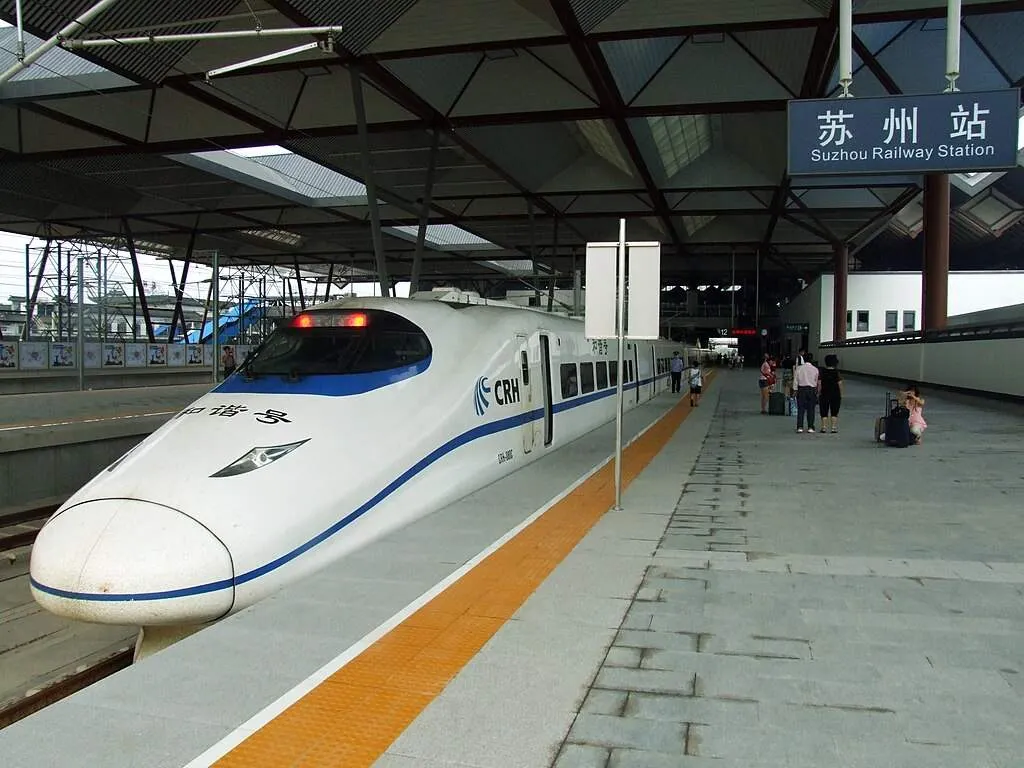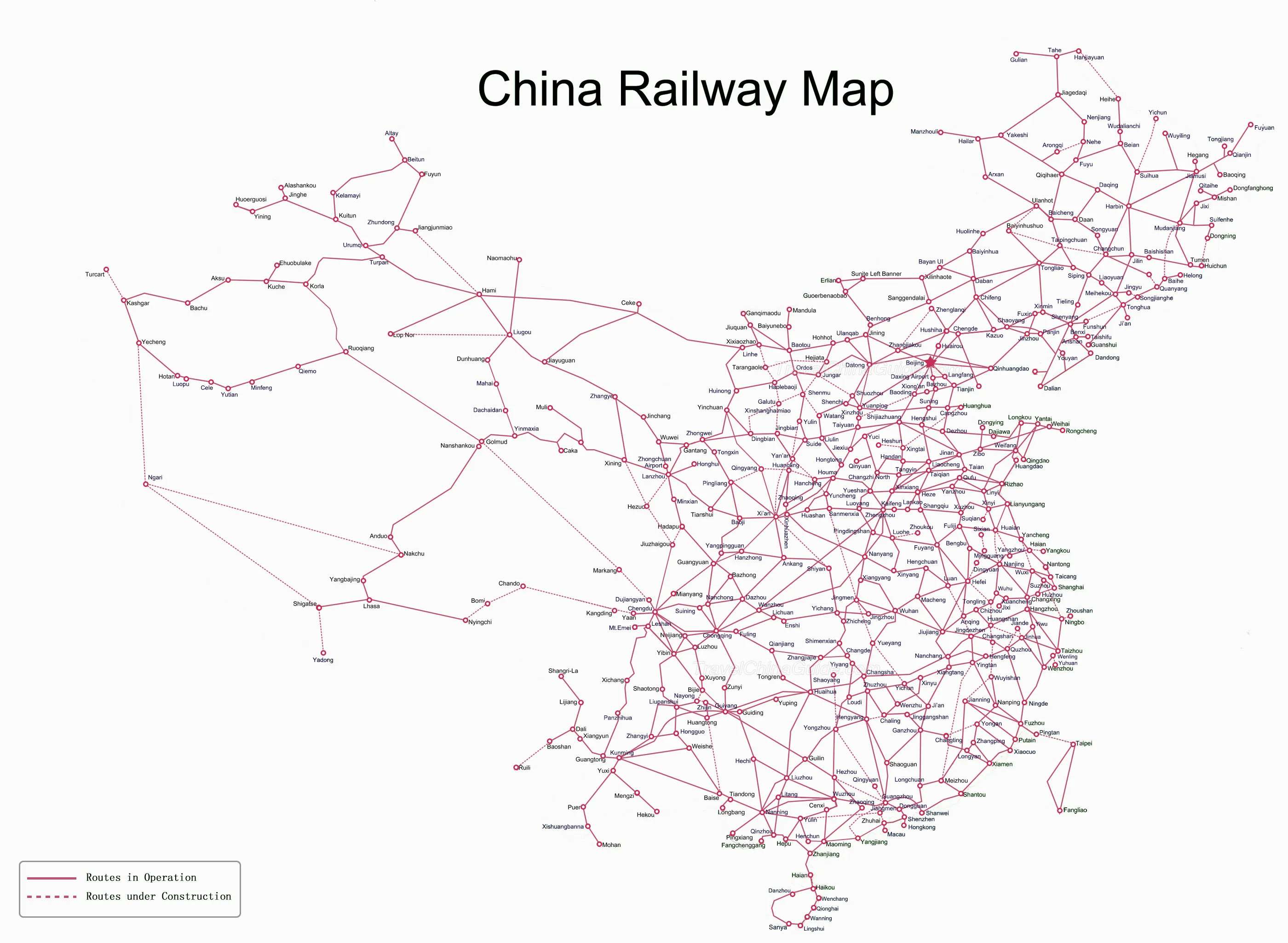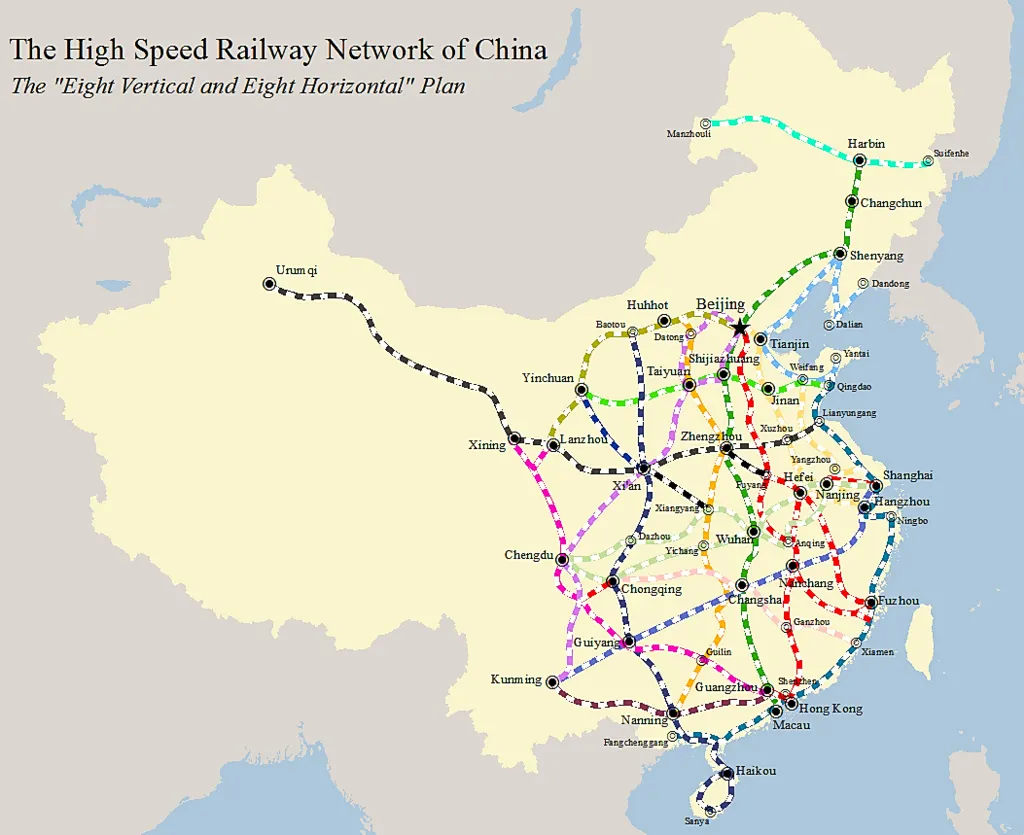


China’s railway network is among the most extensive in the world, spanning major cities and remote mountain regions. For Malaysian travellers, the highlight is the high-speed rail (HSR) system, which is the largest and most advanced globally. By 2020, China’s railways spanned about 146,300 kilometres, second only to the United States. Of this, around 37,900 kilometres were dedicated high-speed lines nearly two-thirds of the entire world’s HSR network. This means Malaysian visitors can travel quickly and comfortably between almost every key destination—from Beijing and Shanghai to Guilin, Chengdu, or even the far northeast—making the HSR map an essential tool for planning a trip to China.
Booking & Tickets

For Malaysian travellers, booking seats on China’s high-speed rail network is simple and convenient if you plan ahead. Ticket sales open two weeks in advance, and most major stations now accept QR-code e-tickets, so there’s no need to queue for paper tickets. The table below highlights the key steps and tips to make your journey smooth and worry-free.
| Step | Details |
|---|---|
Book Early | Tickets open 15 days before departure. Reserve as soon as sales start, especially during peak holidays like Chinese New Year or Golden Week. Use the official 12306 China Railway website/app (English available) or Trip.com, which accepts Malaysian credit cards. |
E-Ticket Convenience | Most stations accept QR-code e-tickets. Present the passport used for booking, scan the code at the gate, and board—no paper ticket required. |
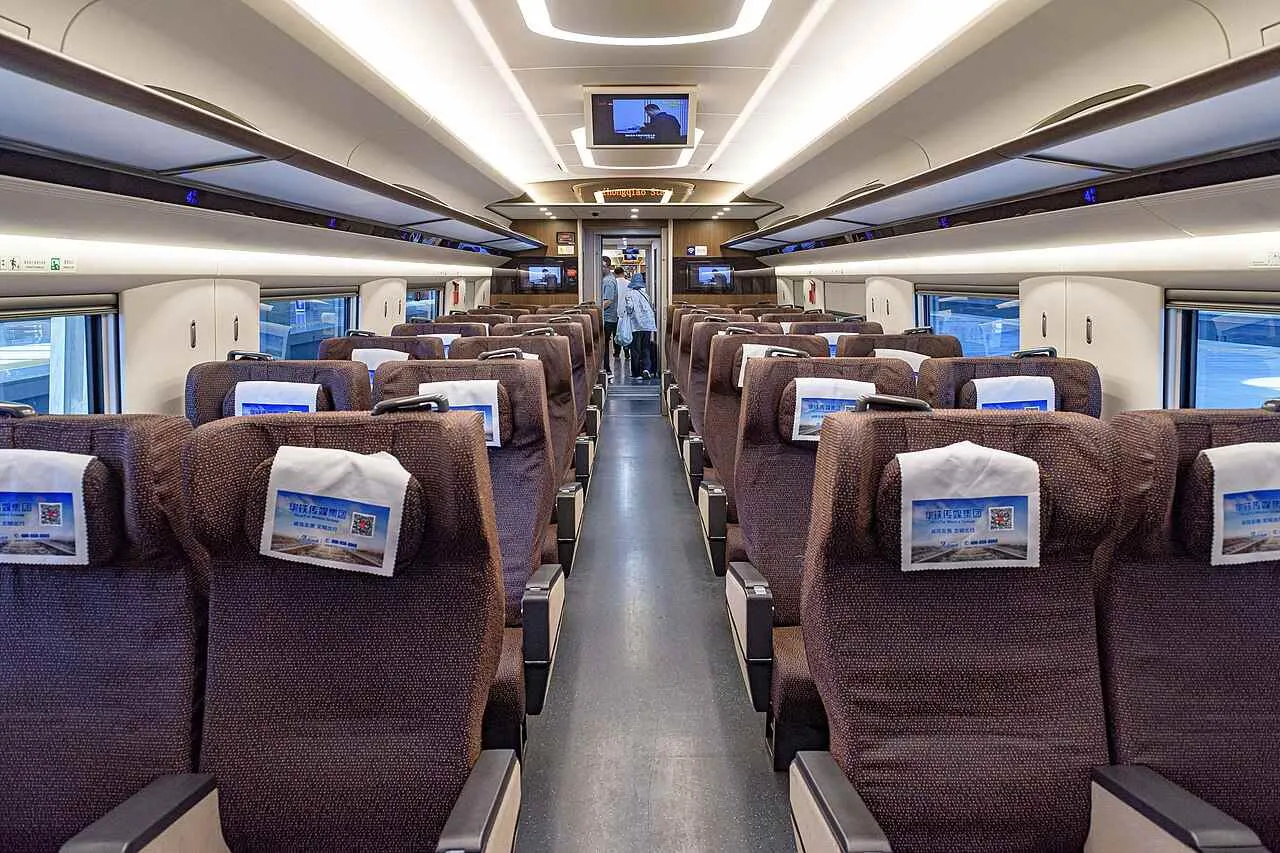
Seat Classes | • Second Class: Budget-friendly, clean, and comfortable. • First Class: Extra legroom and wider seats for a moderate upgrade. • Business Class: Premium reclining seats and quiet cabins for a luxury ride. |
Check Your Details | Ensure your name and passport number on the booking match your travel documents exactly to avoid boarding issues. |
Travel Tip: Keep a screenshot of your QR code and carry your passport at all times. If your phone battery runs out, station staff can retrieve your booking using your passport number.
Major High-Speed Rail Lines in China

China’s vast high-speed rail (HSR) network makes it easy to explore the country in comfort and at impressive speed. Below are four of the most rewarding routes for visitors, with key details to help you plan your journey.
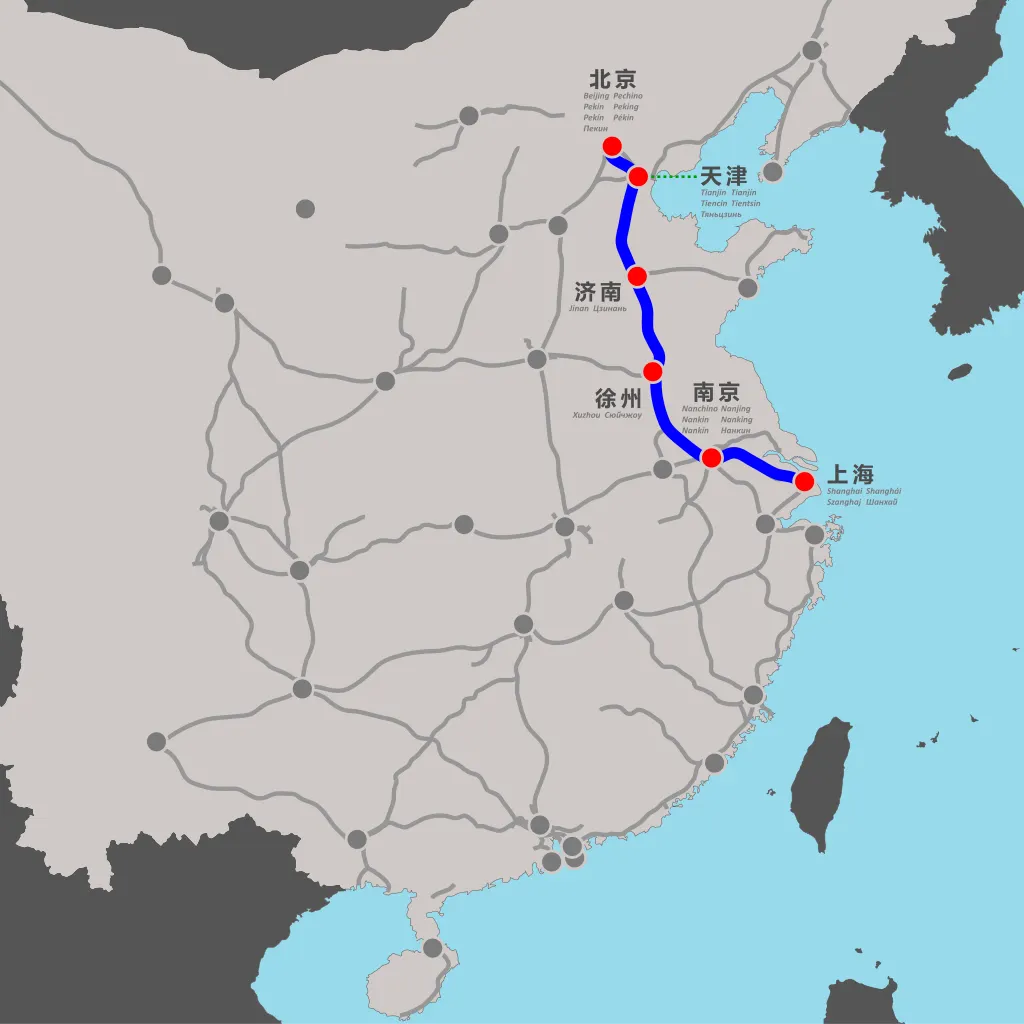
Beijing–Shanghai

- Why It Stands Out: China’s flagship HSR route links the political capital, Beijing, with the financial centre, Shanghai, combining imperial history with modern city life.
- Typical Travel Time: 4.5–6 hours on the fastest G-series trains.
- Key Stops: Tianjin, Jinan, Nanjing
- Highlights for Malaysians:
- Discover Beijing’s iconic sites such as the Great Wall and Forbidden City, then contrast them with Shanghai’s futuristic skyline along The Bund.
- Direct flights from Kuala Lumpur or Penang to either city make this route an excellent starting or finishing point.
- Both cities now offer a growing number of halal dining options, convenient for Muslim travellers.
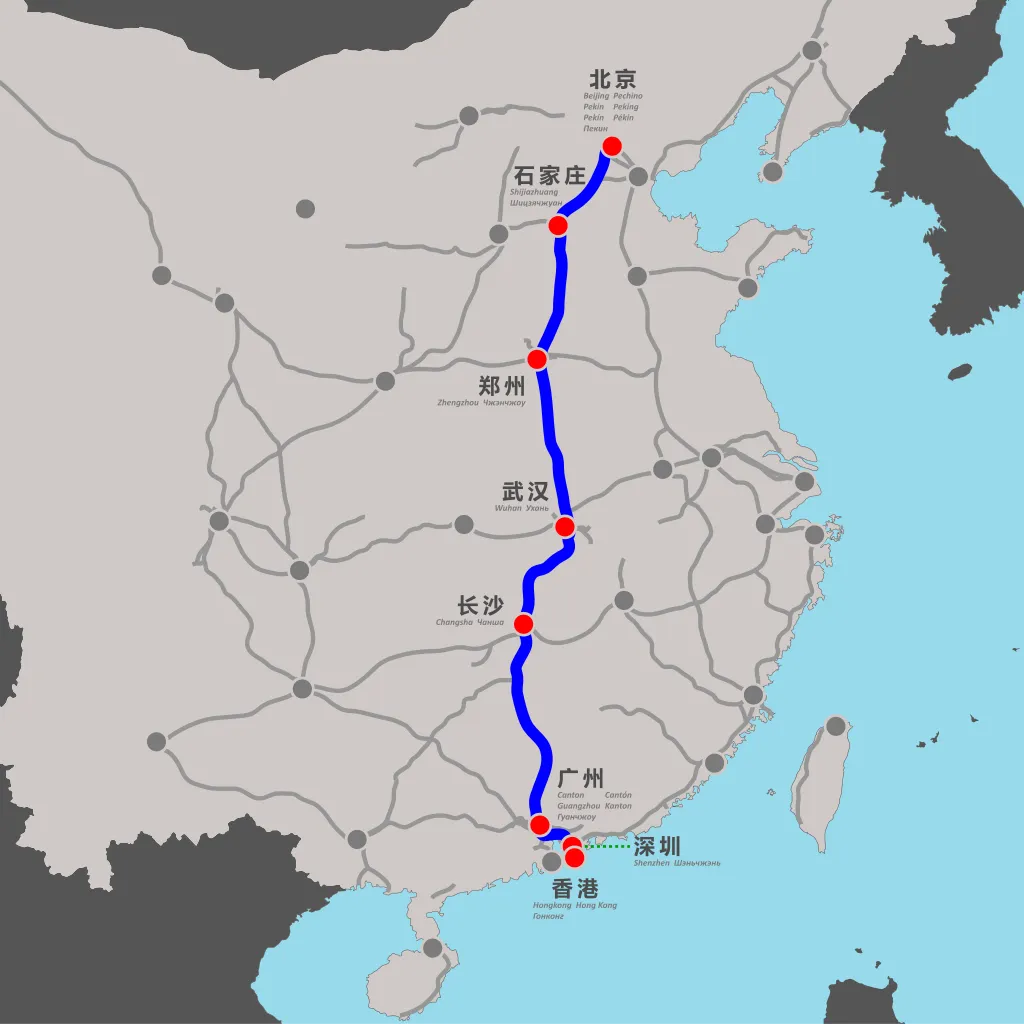
Beijing–Guangzhou

- Why It Stands Out: One of the world’s longest high-speed lines, stretching from northern to southern China.
- Typical Travel Time: 8–10 hours end to end, though many travellers break the journey.
- Key Stops: Shijiazhuang, Wuhan, Changsha
- Highlights for Malaysians:
- Experience the dramatic change in climate and culture, from Beijing’s dry northern plains to the subtropical warmth of Guangzhou.
- Recommended stops include Wuhan, known for its spicy noodles and Yangtze River bridges, and Changsha, celebrated for Hunan cuisine.
- Guangzhou has long-standing ties to Southeast Asia and a large Muslim community, offering numerous halal restaurants and familiar flavours.
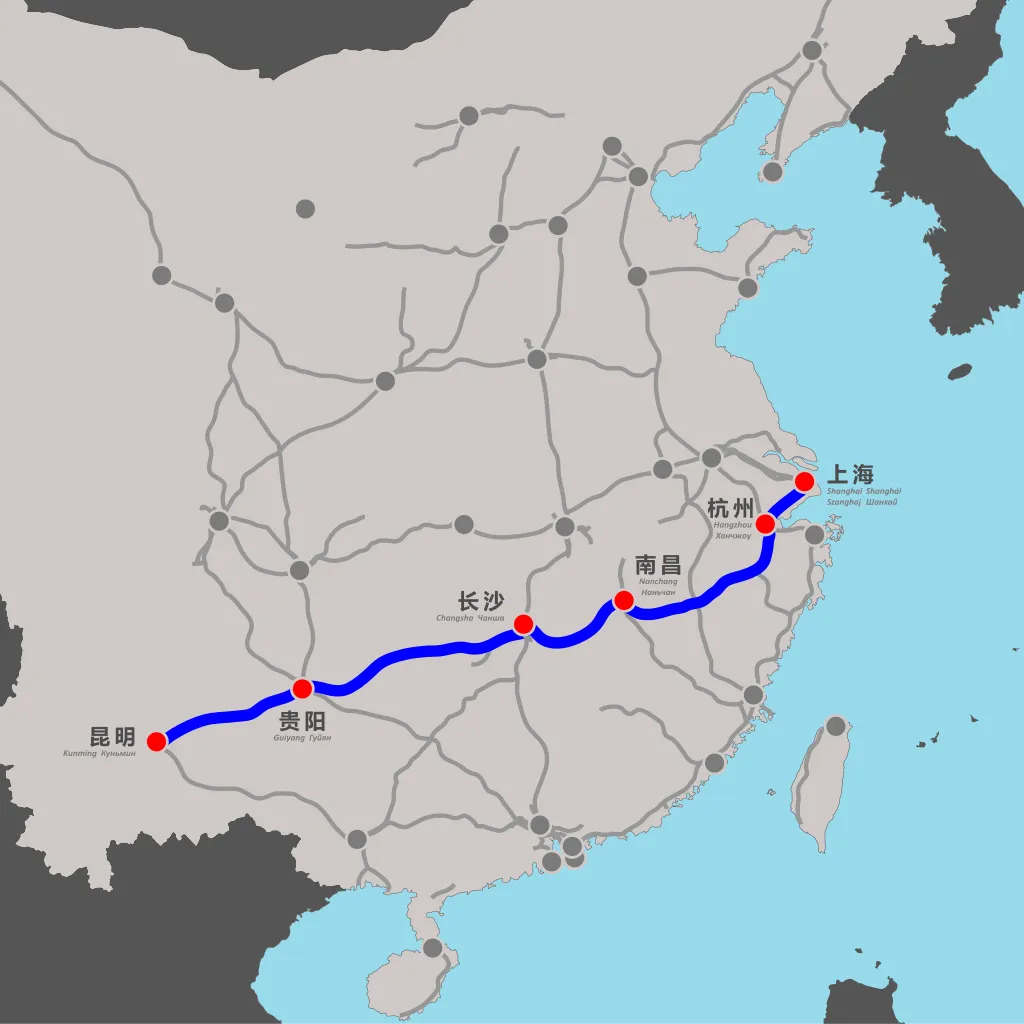
Shanghai–Kunming

- Why It Stands Out: An east-to-west corridor showcasing some of China’s most scenic landscapes.
- Typical Travel Time: Around 10–12 hours for the full route, with popular shorter segments.
- Key Stops: Hangzhou, Nanchang, Changsha, Guiyang
- Highlights for Malaysians:
- Hangzhou: Famous for West Lake, lush tea plantations, and classical gardens—a peaceful beginning or end to your trip.
- Guiyang: Gateway to Guizhou’s ethnic minority villages and colourful festivals.
- Kunming: Known as the “Spring City” for its mild weather, ideal if you prefer a cooler climate than Malaysia’s tropical heat.
- Expect mountain and river panoramas throughout the journey, visible from the comfort of your seat.
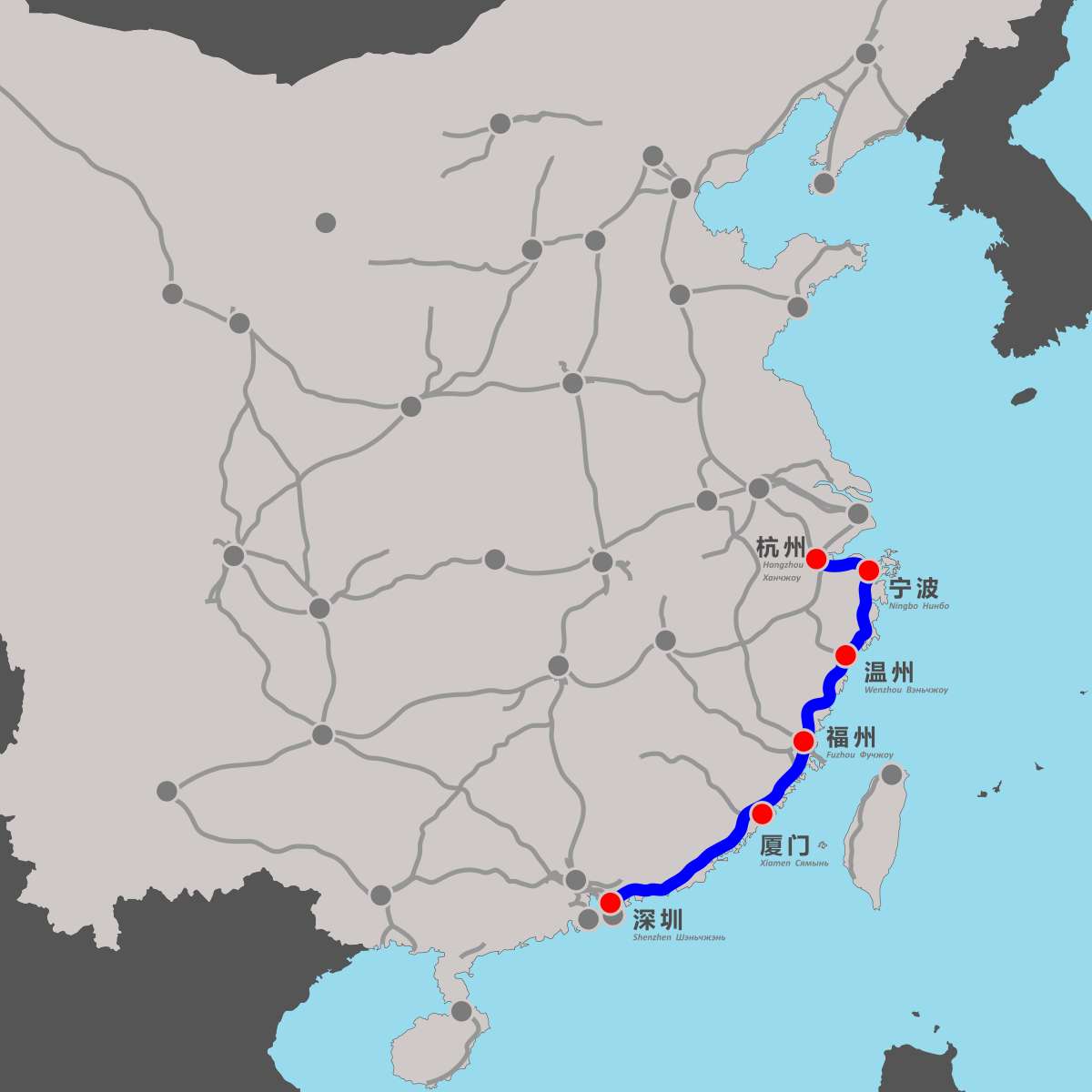
Hangzhou–Shenzhen Coastal Route

- Why It Stands Out
Follows China’s southeastern coastline, connecting historic port cities with modern economic hubs. Ideal for travellers who enjoy maritime history, seafood, and scenic coastal views. - Typical Travel Time
Approximately 7–9 hours for the full journey.
Key Stops
- Hangzhou – Famous for West Lake, tea plantations, and classical gardens.
- Fuzhou – A historic trading port with strong maritime heritage.
- Xiamen – Known for Gulangyu Island, colonial architecture, and fresh seafood.
- Shantou – Heart of Teochew (Chaozhou) culture, significant for Malaysians with Teochew ancestry.
- Shenzhen – Modern tech hub bordering Hong Kong, with excellent shopping and nightlife.
Highlights for Malaysian Travellers
- Strong maritime and cultural connections to Southeast Asia, making local cuisine and traditions feel familiar.
- Abundant seafood and halal-friendly dining options in major cities.
- Easy cross-border access to Hong Kong from Shenzhen, convenient for onward flights to Malaysia.
- A refreshing coastal landscape that contrasts with China’s inland scenery.
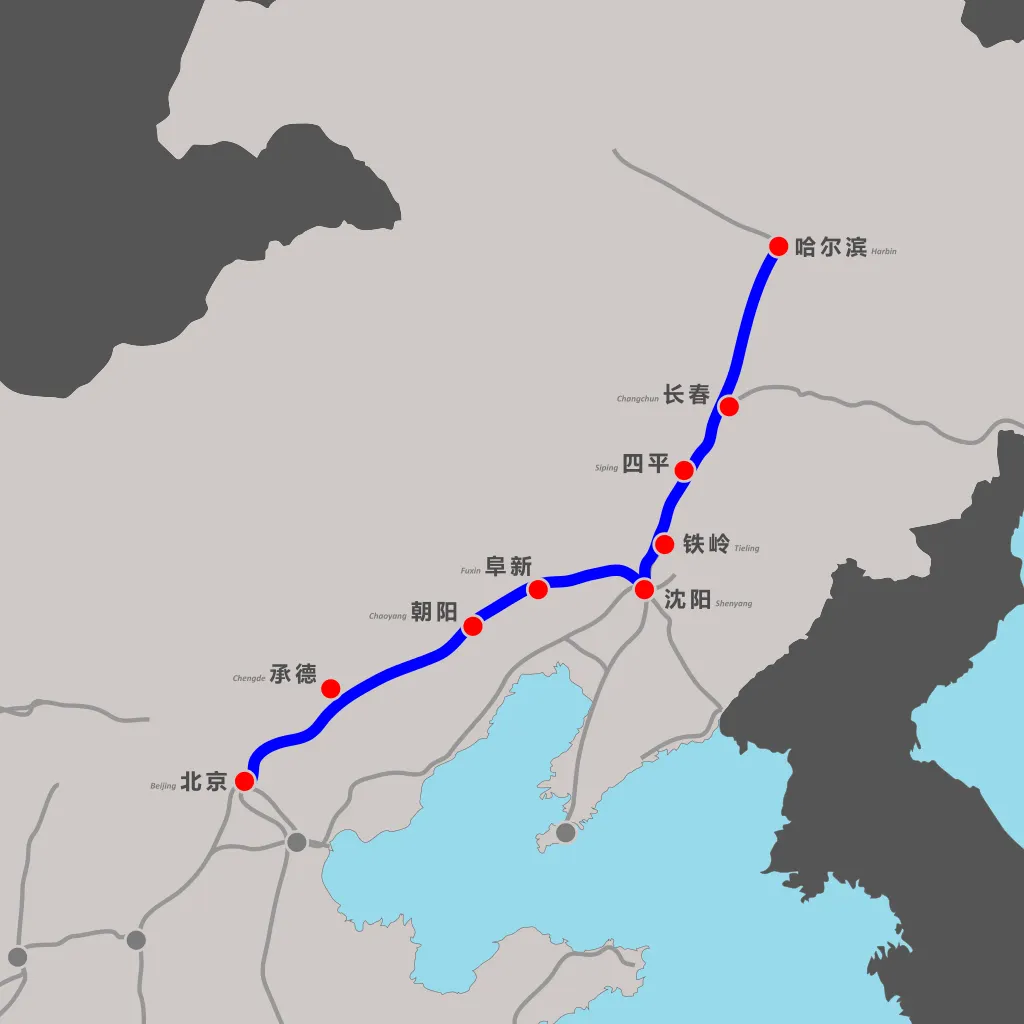
Beijing–Harbin

- Why It Stands Out
This line connects Beijing, China’s capital, with Harbin, the famous “Ice City” of the northeast. It is the fastest way to reach Harbin’s world-renowned Ice and Snow Festival and the unique Russian-influenced architecture of Heilongjiang Province. - Typical Travel Time
Around 5 to 5.5 hours on G-series high-speed trains (much faster than the 8-hour conventional service).
Key Stops
- Beijing – Imperial landmarks such as the Forbidden City and the Great Wall.
- Shenyang – Historic Manchu culture and the Shenyang Imperial Palace.
- Changchun – Known for automotive industry history and the Puppet Emperor’s Palace.
- Harbin – Final destination, celebrated for its annual Ice and Snow Festival, St. Sophia Cathedral, and Russian-style streets.
Highlights for Malaysian Travellers
- Winter Wonderland: Visit between December and February for the spectacular Harbin International Ice and Snow Sculpture Festival.
- Distinct Culture: Experience a blend of Chinese and Russian influences—architecture, food, and art.
- Cool Climate: Harbin offers a dramatic contrast to Malaysia’s tropical heat, with winter temperatures often dropping below –20 °C.
- Convenient Access: Direct flights from Kuala Lumpur to Beijing make it easy to start the journey, with seamless connections by high-speed rail.
High-Speed Railway Lines China

China’s Gāotiě (高铁) network is the largest in the world, with trains running up to 350 km/h. It’s a fast, comfortable way to explore the country—perfect for Malaysians who want to cover long distances without the hassle of airports. Below is an easy reference table featuring the most popular lines, plus why each route is worth adding to your itinerary.
| High-Speed Line | Key Cities Connected | Why It’s Ideal for Malaysian Travellers |
|---|---|---|
Beijing – Shanghai (Jinghu) | Beijing · Tianjin · Nanjing · Shanghai | China’s flagship line. Experience Beijing’s imperial heritage and Shanghai’s modern skyline in about 4.5 hours. Frequent flights from Kuala Lumpur or Penang make either city a convenient entry or exit point. |
Beijing – Guangzhou (Jingguang) | Beijing · Wuhan · Changsha · Guangzhou | One of the world’s longest HSR routes. Travel from the northern capital to subtropical Guangzhou in 8–10 hours, with cultural stopovers like Wuhan’s Yangtze River bridges. Guangzhou also offers a large Muslim community and plentiful halal dining. |
Shanghai – Kunming (Hukun) | Shanghai · Hangzhou · Changsha · Guiyang · Kunming | Links the coast to Yunnan’s cool “Spring City.” Scenic mountains and minority cultures make it ideal for travellers who prefer a mix of urban and natural sights. |
Hangzhou – Fuzhou – Shenzhen (Coastal Route) | Hangzhou · Fuzhou · Xiamen · Shantou · Shenzhen | Follows China’s southeastern seaboard. Perfect for Malaysians with ancestral roots in Fujian or Teochew regions, plus fresh seafood and sea views. Ends right next to Hong Kong for easy cross-border travel. |
Harbin – Dalian | Harbin · Changchun · Shenyang · Dalian | Explore the northeast and Harbin’s famous Ice Festival. Winter scenery contrasts beautifully with Malaysia’s tropical climate. |
Beijing – Harbin (Jingha) | Beijing · Chengde · Shenyang · Harbin | Fast link to China’s far northeast—ideal for a winter holiday and snow activities. |
Beijing – Hong Kong | Beijing · Shenzhen · Hong Kong | Direct service from the capital to Hong Kong in about 9 hours, useful for multi-country itineraries. |
Hefei – Fuzhou | Hefei · Wuyuan · Fuzhou | Access picturesque mountain villages and traditional tea culture. |
Xiamen – Shenzhen | Xiamen · Shantou · Shenzhen | Quick coastal ride between two lively port cities with strong Southeast Asian ties. |
Guiyang – Guangzhou | Guiyang · Guilin · Guangzhou | Pass through the limestone karst peaks of Guilin—one of China’s most photogenic landscapes. |
Zhengzhou – Xi’an | Zhengzhou · Xi’an | Speedy route to the Terracotta Warriors and Silk Road history. |
Xi’an – Chengdu | Xi’an · Hanzhong · Chengdu | Scenic journey through the Qinling Mountains to Sichuan’s panda country. |
Nanjing – Hangzhou | Nanjing · Hangzhou | Quick hop between a former imperial capital and West Lake’s gardens—great for a short getaway. |
Shanghai – Nanjing | Shanghai · Suzhou · Nanjing | Frequent service, perfect for day trips to Suzhou’s classic canals and gardens. |
Tianjin – Qinhuangdao | Tianjin · Qinhuangdao | Ideal seaside escape from Beijing or Tianjin. |
Shijiazhuang – Jinan | Shijiazhuang · Jinan | Convenient connection across Hebei and Shandong provinces. |
Changsha – Kunming | Changsha · Guiyang · Kunming | A central-to-southwest link to Yunnan’s mild climate and ethnic diversity. |
Lanzhou – Xinjiang | Lanzhou · Urumqi | Gateway to Silk Road deserts and dramatic northwest scenery. |
Popular Hotels in Beijing
5 star
Business travel
Breakfast
How to Read the Official China High-Speed Rail Map

China’s HSR map can look overwhelming at first, but it’s designed with a few simple conventions:
| Map Features | Meaning | Details |
|---|---|---|
Coloured Lines | Each colour represents a main HSR corridor (e.g., red for Beijing–Shanghai, blue for coastal routes). | When planning, match the colour on the map with the name of the corridor in your itinerary. |
Letter Codes (G/D/C) | G= Gaotie (fastest trains up to 350 km/h), D= Dongche (slightly slower intercity services), C= Chengji (commuter-style). | For long distances, look for G trains because they’re the quickest and most comfortable. |
City Dots | Large circles mark major hubs such as Beijing, Shanghai, Guangzhou. Smaller dots indicate secondary stops. | Big hubs usually have English signs and easier transfers; ideal for first-time visitors. |
Interchange Symbols | Overlapping lines or double rings show transfer stations where different corridors meet. | Useful if you want to change lines without leaving the station—great for multi-leg trips. |
Distance & Travel Time Boxes | Some maps list average hours between major cities. | Cross-check with your booking app to confirm current schedules. |
International Links | Dashed or highlighted extensions (to Hong Kong, Laos, etc.). | Handy for Malaysians combining China with neighbouring countries. |
Step-by-Step for First-Time Users:
- Pick Your Corridor: Identify your start and end cities on the map and note the colour of the connecting line.
- Check Hubs: Look for major interchange stations if your cities aren’t on the same corridor.
- Confirm Train Type: On the booking site, choose a train with the same corridor and letter code (e.g., G for the fastest).
- Match Station Names: Many cities have more than one station (e.g., Beijing South vs. Beijing West). Ensure the station matches your ticket.
Travel Tip:
Download a high-resolution PDF version of the official map or save it offline on your phone. Apps like Trip.com, China Railway 12306 (English), and Amap (Gaode Map) overlay real-time schedules onto the HSR network, making it even easier to navigate.
Money & Payments for High-Speed Rail

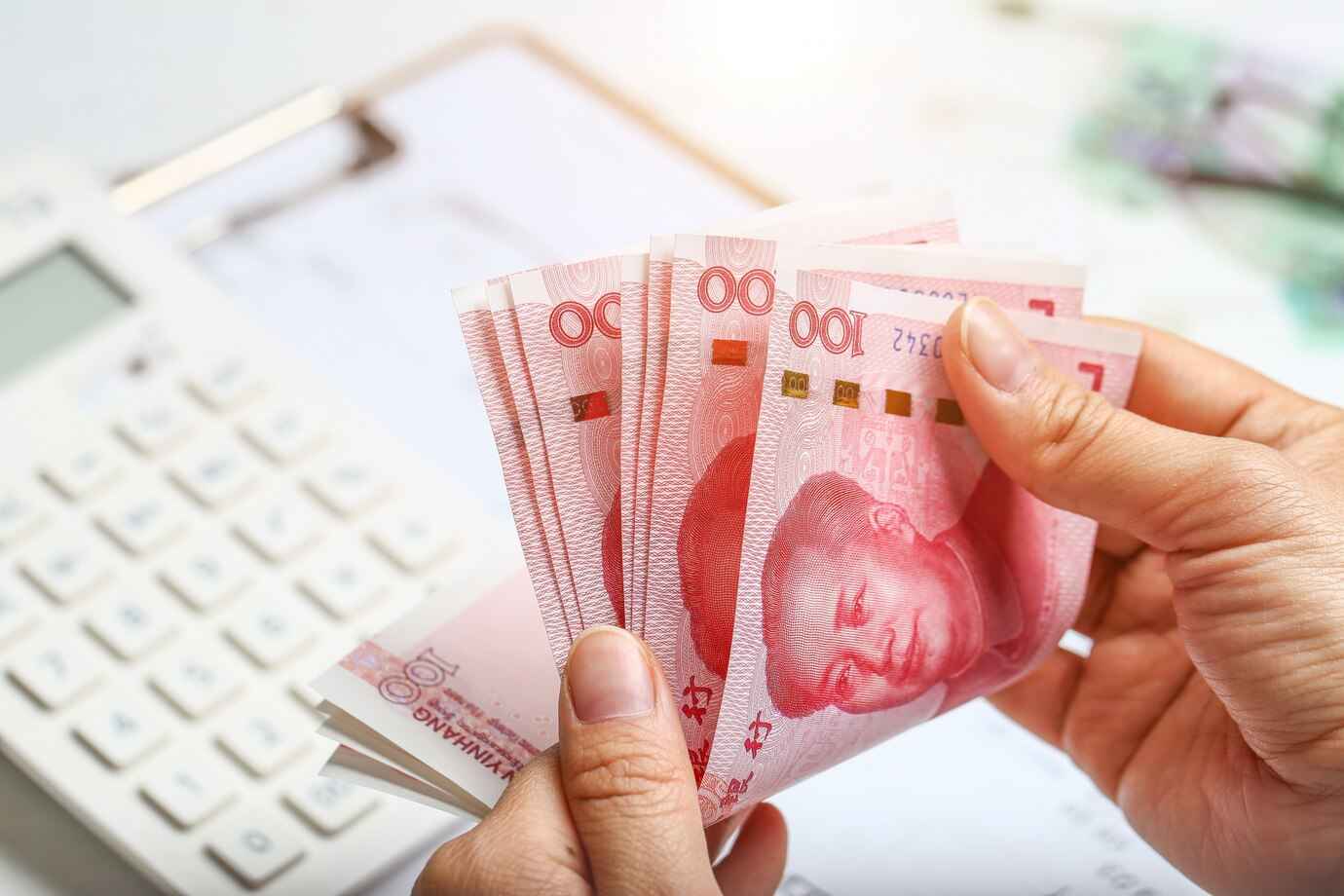
Planning how to pay for tickets, food, and extras will make your journey smoother. Here are the key options and tips for Malaysian visitors:
| Payment Method | Details & Malaysian Tips |
|---|---|
Mobile Payments | Alipay and WeChat Pay are the most common. Both now let foreigners link a Malaysian Visa or Mastercard once you register with your passport. This is the easiest way to pay for tickets, station snacks, or meals on the go. |
Cash (RMB) | Keep some Chinese yuan (RMB) for small purchases—like drinks from station kiosks or the onboard snack trolley—because not every vendor accepts foreign cards. |
Credit & Debit Cards | International cards (Visa/Mastercard) work on Trip.com and at many large station ticket counters, but rarely on the train itself. Always have a backup payment option. |
Ticket Booking | Book early—sales open 15 days in advance using Trip.com or the official 12306 site/app (English version) Both support Malaysian credit cards and Alipay/WeChat Pay. |
Top-Ups & Currency Exchange | Exchange Malaysian ringgit to RMB before departure, or withdraw cash at ATMs in major stations. Make sure your bank card allows UnionPay or international withdrawals. |
Download and set up Alipay or WeChat Pay before you arrive in China. Verifying your Malaysian card in advance will save time and ensure you can buy train tickets, pay for food, and handle any last-minute expenses without stress.
🔥Go China
RM99 hotel flash sale every Tuesday and claim Flight and hotel promo code pack worth RM94!

FAQs High-Speed Rails (HSR) Map
How early should I buy my HSR tickets?
Sales typically open 15 days in advance. Booking early—especially during Chinese holidays or weekends—gives you more seat choices and better departure times.Do I need a printed ticket?
Not anymore. Most stations accept QR-code e-tickets. Bring the passport you used for booking, as the gate scanners match your QR code to your passport details.Is mobile payment reliable for foreigners?
Yes. Both Alipay and WeChat Pay now let travellers link a Malaysian Visa or Mastercard after passport verification. Transactions are instant and secure.Is Wi-Fi available on board?
Some routes offer free Wi-Fi, but it can be patchy. Download maps, e-tickets, and entertainment in advance.Do I need internet to board the train?
Not strictly, but you need a data connection to display an e-ticket QR code if it’s not downloaded. A local SIM or eSIM is recommended.