


Thinking about booking an international flight? Do you know what a fuel surcharge is? In this article, we break down how fuel surcharges are calculated and share a 2026 table of fuel surcharges for major airlines. Follow along and get smart about your airfare—let’s crunch the numbers and score the best deal on your tickets!
Latest Fuel Surcharge Updates
With global oil prices on the rise, airline fuel costs are climbing as well. Cathay Pacific has announced that, effective March 18, 2026, it will adjust fuel surcharges, with overall increases of up to double. After the adjustment, short-haul routes will go from HK$142 to HK$290, medium-haul from HK$264 to HK$541, and long-haul from HK$569 to HK$1,164. Per one-way trip, the increase comes to about NT$609 to NT$2,450.
Meanwhile, regarding whether Taiwanese airlines will follow suit, China Airlines, EVA Air, and STARLUX Airlines said they will continue to monitor international oil prices and, in line with CPC Corporation’s jet fuel pricing mechanism, will reassess next month whether to adjust fuel surcharges.
What is a fuel surcharge?
The fuel surcharge—known as the Bunker Adjustment Factor (BAF)—is an extra fee added to ocean and air freight rates, mainly to account for fluctuations in fuel prices.
When fuel prices climb, transportation costs rise as well. To offset the increase, airlines or shipping companies may add a fuel surcharge, passing some of the additional cost on to shippers, cargo owners, or passengers.
👉 Simply put: the more expensive the fuel gets, the higher this fee might be.
In Taiwan, fuel surcharges aren’t just slapped on at will. Before adding them, airlines must file with the regulator, which then forwards the case to the Ministry of Transportation and Communications for record-keeping. The entire process is compliant and transparent—completely in step with international fare management trends!
Next time you spot this charge, why not think of it as 👉 an essential in-flight “chip-in-for-gas” fee? Doesn’t that feel a lot more reasonable?

Photo credit: Unsplash
How is the fuel surcharge calculated?
Fuel surcharges can feel mysterious, but there’s a clear logic behind how they’re calculated. Get the key points below, and the next time you check your bill, you won’t be left scratching your head!
Calculated per flight segment
👉 Most airlines follow a “one flight segment = one fee” rule!
In other words:
- Each time you take off and land, that counts as one flight segment.
- Just a heads-up: Even if you booked a connecting itinerary, once there’s a layover, each leg may come with its own fuel surcharge—it’s not a single flat fee for the whole trip!
Long-haul vs. Short-haul
Airlines typically classify routes as short-haul or long-haul based on flight distance and duration.
For traditional full-service airlines departing from Taiwan,
- Most flights within Asia are considered short-haul.
- Intercontinental flights—such as those to Europe, the Americas, and Africa—are considered long-haul.
The key is the fuel surcharges on long- versus short-haul flights—the difference can be pretty big. 👉 The farther you fly, the more fuel costs get added, naturally!
Track crude oil price fluctuations
👉 Fuel surcharges are adjusted in line with fluctuations in international crude oil prices.
- Fuel prices are soaring, and surcharges may increase.
- If oil prices fall below a certain threshold, airlines may also lower these fees—or even suspend them.
That said, these adjustments aren’t made on a whim—you’ll usually need to submit advance notification to the relevant authorities.
There are rules for both public announcements and reporting.
Right now, the fuel surcharge on international flights operated by Taiwan-based airlines is 👉 adjusted in line with changes to the international jet fuel posted price announced by CPC Corporation, Taiwan. When fuel prices change, the surcharge changes with them.
Plus, under Taiwan’s regulations, airlines must submit to the competent authority for forwarding to the Ministry of Transportation for the record before collecting any fees. The whole process aligns with international fare-management trends—transparent and backed by clear rules!
Is it already included in the ticket price, or is it listed separately?
- Some ticket prices already include the fuel surcharge, so you won’t need to pay extra at checkout.
- But some platforms might list it as a separate item (so be sure to double-check!)
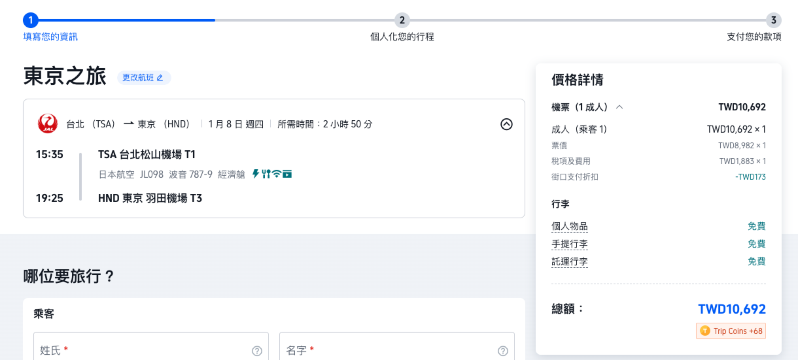
👉 For example, on Trip.com, the flight checkout page usually clearly labels details like "fare includes airport taxes, fuel surcharges, and departure taxes," so you can see at a glance exactly where your money is going.
👉 In a nutshell: fuel surcharges aren’t random—they depend on the flight segment, the distance, fuel prices, and the rules. Once you understand how it all works, you’ll feel more confident booking your next flight!

How much are the fuel surcharges for major airlines?
If you’re flying out of Taiwan, routes are usually split into short-haul and long-haul—different distances and different airlines mean the fuel surcharges will naturally vary.
We’ve pulled it all together for you—here’s a clear, one-stop rundown of what each airline is charging right now, so you’ll know what to expect before you book!
Fuel Surcharge Summary Table for Major Airlines (Flights Departing Taiwan / Official Announcements)
We’ve gathered the current fuel surcharge rates, but for the most up-to-date information, be sure to check the airlines’ official websites!
Airlines | Flight Routes | Fuel surcharge amount |
China Airlines/EVA Air/STARLUX Airlines | Short-haul | USD 17.5 / per flight segment (about NT$549) |
Long-haul | USD 45.5 / per flight segment (approximately NT$1,428) | |
Cathay Pacific | Short-haul | HKD 191 |
Long-haul | HKD 767 | |
Emirates | Long-haul | Economy Class: NT$2,820 (one-way) / NT$5,640 (round-trip) |
Long-haul | Business/First Class: NT$12,150 (one-way) / NT$24,300 (round-trip) | |
Japan Airlines (JAL) | Short-haul | Go to Japan for USD 40 |
Korean Air | Short-haul | $22 |
Turkish Airlines | Long-haul | Economy Class USD 168 |
Business Class USD 220 | ||
Etihad Airways | Long-haul | Economy Class USD 160 |
Business Class USD 480 |
Can the fuel surcharge be refunded?
Yes—if you purchased a refundable fare, the airport taxes and fuel surcharges will be credited back to the credit card you used to pay. However, for low-cost carriers or nonrefundable fares, fuel surcharges generally aren’t refundable.
Explore more flight booking tips
🔥 Hotel Coupons: Exclusive Hotels Deal for New Users
Discover the world with trip.com! Book the perfect hotel anywhere in the world and get an unbeatable 10% discount if you're a first-time user! If this is your second time using it, you will receive a 5% discount! Download our app now and start planning your next trip with ease.
Just click this link and download the Trip.com App, after successfully registering as a member, use it when you place an order!
🔥Save More with Up to 10% Off
Use our promo code to enjoy up to 10% OFF on your attraction tickets, tours and eSIMs! There is also a 5% OFF (up to S$3) for new users!
🔥New User Coupon: Save More with an Extra 5% Off
Use our promo code to enjoy an extra 5% off (up to S$4) on your attraction tickets, eSIMs, and tours! ⏳Redeem within 3 days of claiming
Fuel Surcharge FAQs
What are the fuel surcharges for China Airlines, EVA Air, and Starlux Airlines?
The fuel surcharges for these three Taiwanese airlines are the same: USD 17.5 per segment for short-haul flights and USD 45.5 per segment for long-haul flights.How much is Cathay Pacific's fuel surcharge?
Short-haul flights cost HKD 191 per segment, and long-haul flights cost HKD 767 per segment.How do I check the fuel surcharge?
For example, on Trip.com, the flight checkout page usually clearly shows details such as "fare includes airport tax, fuel surcharge, and departure tax," allowing you to see at a glance where your money goes. However, some platforms list this as a separate item (pay special attention!).


