

Is China Cheaper Than Korea for Malaysian Tourists? China vs Korea travel cost


China is usually cheaper than South Korea for Malaysian tourists once you arrive, especially for local meals, everyday transport and accommodation outside the most expensive districts. However, the total holiday is not always cheaper. A promotional Kuala Lumpur–Seoul flight, a Seoul-only itinerary or an expensive multi-city route across China can narrow—or even reverse—the difference.
For most budget and mid-range Malaysian travellers, China offers better value. For a short Seoul holiday with a good flight deal, South Korea may cost about the same. To compare fairly, use the same dates, baggage allowance, hotel standard and number of cities. Shopping is excluded from our base verdict. 🧳
Quick answer: China usually wins on ground costs. The total trip winner depends on flights, cities and itinerary.
Flights to Shanghai
Flights to Beijing
Flights to Xiamen
Flights to Busan
Flights to Seoul
Lihat Semua Penerbangan


Is China or Korea cheaper for Malaysians? 💰

China is usually cheaper when you:
- Eat mainly at local restaurants.
- Use the metro, buses and DiDi.
- Visit cities such as Chengdu, Xi’an, Chongqing or Guangzhou.
- Stay within one city or one region.
- Travel for seven days or longer.
- Avoid private English-speaking tours and long-distance domestic flights.
Korea may be similarly priced—or cheaper—when you:
- Find a strong return-flight promotion to Seoul.
- Stay only in Seoul.
- Choose a guesthouse or hotel outside Myeongdong and other premium districts.
- Focus on markets, neighbourhoods, parks and low-cost palaces.
- Compare it with a China itinerary involving several distant cities.
Your personal result may change when you:
- Require halal-only meals.
- Travel with children or elderly family members.
- Plan K-pop, K-beauty or souvenir shopping.
- Visit Disneyland, Lotte World, Everland or other theme parks.
- Depart from Penang, Johor Bahru, Kota Kinabalu or Kuching instead of KUL.
Quick winner by category
Cost category | Usual winner | What Malaysians should know |
|---|---|---|
Return flight from Malaysia | Depends on date and city | Seoul promotions can beat Beijing or Shanghai; Guangzhou or Shenzhen may be cheaper to reach |
Entry administration | China | Eligible Malaysian ordinary-passport holders can enter China visa-free for qualifying short visits |
Budget accommodation | China usually cheaper | The advantage is larger outside Beijing and Shanghai |
Mid-range accommodation | Depends on district | Central Shanghai or Beijing can approach Seoul prices |
Local food | China usually cheaper | Similar local meal types must be compared |
Halal food | China often cheaper | Availability and price vary greatly by neighbourhood |
Metro and bus | China usually cheaper | Both remain manageable for tourists |
Taxi or ride-hailing | China usually cheaper | Airport distance and traffic still matter |
Intercity train | Not directly comparable | China has cheaper short routes, but its cities are much farther apart |
Attractions | Depends on itinerary | Korean palaces can be inexpensive; Chinese theme parks and day tours can be costly |
Mobile data | Similar | Compare data allowance, VPN requirements and hotspot support |
Payment setup | Korea often simpler | China may require more app preparation |
Shopping | Personal | Excluded from the base budget |
Overall budget holiday | China usually cheaper | Especially for longer, ground-focused trips |
First-time convenience | Korea may feel easier | Card payments and transport cards may be more familiar |
What to Prepare for a Trip to China?
- Visa & Entry Tips Malaysians transiting through China to a third country can usually apply for a 24-hour or 240-hour visa-free transit; in addition, a 30-day visa-free period has been implemented between China and Malaysia. Learn more about China Arrival Card to land in China easily.
- Getting Connected VPNs are vital for accessing Google, WhatsApp, Instagram, etc in China. Set one up before arriving. China eSIMs are the easiest option for data and bypassing restrictions.
- Money Exchange & Tax Refunds Exchange money in China banks (better rates than airports). ATMs accept foreign cards, but notify your bank first. For tax refunds, spend over ¥500 at stores with a "Tax-Free" sign. Keep receipts and get forms stamped at customs before departure.
Must-Have Apps in China
- China Payment Apps Forget cash. Chinese use Alipay (I like it better) or WeChat Pay to pay for everything in China. Scan a QR code at noodle stalls, metros, even temples. Link your foreign Visa/Mastercard before landing.
- China Map Apps Amap (Gaode Map) & Baidu Map (limited English) is what locals use, with real-time navigation, metro/bus routes, and traffic updates. Apple Maps does a good job too if you're already an IOS user.
- China Transport Apps Street taxis are cheap, but drivers rarely speak English. Use China Taxi App like DiDi (China’s Uber)—set your destination in English, pay by Alipay.
- China Travel Apps 15+ China trips taught me: Use Trip.com. It's the best English app for booking China trains/flights/hotels + finds Trip.com deals.
- China Dating Apps Locals use Tantan (China’s Tinder) and Momo. WeChat’s “People Nearby” works too, but expect language barriers unless your Mandarin’s decent.
- China Food App Use Meituan (also helps find nearby restaurants) or Ele.me for food delivery—both have English mode. No English menu in restaurants? Scan the QR with Alipay's translator.
How we compared China and South Korea fairly

Country averages alone are not enough. Comparing “China” with “Seoul” is especially misleading because prices in Shanghai, Beijing, Chengdu and Xi’an are very different.
This article uses two layers of comparison:
- A matched 7-day city-trip model: Shanghai versus Seoul.
- Background travel-cost data: Used only to check whether the direction of the estimates is reasonable.
Main assumptions
- Departure airport: Kuala Lumpur International Airport.
- Travel dates for the airfare snapshot: 12–19 October 2026.
- Trip length: 7 days and 6 nights.
- Flight: Return economy ticket.
- Baggage comparison: A fare with checked baggage on both sectors.
- Accommodation: Similar location, review level and room type.
- Meals: Three meals daily.
- Local transport: Approximately four public-transport journeys per day.
- Attractions: A mixture of free areas and standard paid attractions.
- Shopping: Excluded.
- Concerts and beauty treatments: Excluded.
- Currency reference: Approximately CNY 1 = RM0.604 and KRW 1,000 = RM2.79, based on late-July 2026 market rates. Actual card rates may differ.
The planning figures below are budget ranges, not fixed prices. Hotel rates, airfares and attraction prices should be refreshed before publication or booking.
7-day China vs Korea budget from Malaysia

Ground-only budget: Shanghai vs Seoul
Traveller type | Shanghai, 7D6N | Seoul, 7D6N | Likely winner |
|---|---|---|---|
Budget solo traveller | RM1,750–RM2,150 | RM2,450–RM3,050 | China |
Mid-range couple | RM4,400–RM5,400 | RM6,100–RM7,600 | China |
Family of four | RM7,400–RM9,500 | RM10,400–RM13,000 | China |
These ground estimates include accommodation, meals, local transport, airport transfers, standard sightseeing, connectivity and basic payment or entry setup. They exclude flights, shopping, insurance and a contingency fund.
Live airfare snapshot
A Trip.com search conducted on 31 July 2026 for travel from 12 to 19 October 2026 found the following matched direct options with checked baggage on both sectors:
- KUL–Shanghai return: approximately RM2,725 per adult.
- KUL–Seoul return: approximately RM4,472 per adult.
This particular snapshot strongly favoured Shanghai. It does not prove that Shanghai flights are always cheaper. A different week, promotional campaign or departure airport may produce the opposite result.
Estimated flight-inclusive total using this snapshot
Traveller type | Shanghai | Seoul |
|---|---|---|
Budget solo traveller | RM4,475–RM4,875 | RM6,922–RM7,522 |
Mid-range couple | RM9,850–RM10,850 | RM15,044–RM16,544 |
Family of four, adult-fare equivalent* | RM18,300–RM20,400 | RM28,300–RM30,900 |
*The family figure uses an adult-fare equivalent only to demonstrate how airfare can dominate the result. Always conduct a separate family search because child fares, baggage bundles and seat-selection charges differ.
What the budget model tells us
The ground-only difference is more useful than one airfare snapshot. In the model, Shanghai is around 25%–35% cheaper for a budget traveller because of meals, basic rooms and city transport.
However, flights can be the largest component of a short holiday. When Seoul fares go on sale, a five-day Seoul trip may approach the cost of Shanghai—even though daily spending remains higher in Korea.
Independent traveller-spending data shows the same broad direction: Budget Your Trip currently places China’s average budget and mid-range daily spending below South Korea’s. These are broad averages, not substitutes for a matched itinerary.
Flights from Malaysia: China or Korea—which is cheaper to reach? ✈️
International airfare can change the entire answer.
China is not one destination. Malaysian travellers may fly to:
- Shanghai
- Beijing
- Guangzhou
- Shenzhen
- Chengdu
- Chongqing
- Hangzhou
- Xi’an
A cheap flight to Guangzhou does not prove that Beijing is cheap to reach. Similarly, a cheap Seoul ticket does not include the additional cost of travelling onward to Busan or Jeju.
When comparing flights, use the same:
- Departure airport
- Return dates
- Baggage allowance
- Cabin class
- Number of stops
- Layover duration
- Seat-selection conditions
- Meals and other add-ons
- Arrival airport
- Airport-to-hotel cost
What about Penang, Johor Bahru and East Malaysia?
Results may differ significantly outside Kuala Lumpur.
Travellers from Penang or Johor Bahru may need a connection for certain Chinese cities. Kota Kinabalu travellers may sometimes find geographically convenient routes to parts of China or Korea, but schedules can be limited.
Compare the door-to-door total, not just the first fare displayed:
Flight + baggage + seat + meals + connection + airport transport
Also avoid comparing different seasons. Chinese Golden Week, Korean cherry-blossom season, autumn foliage, Malaysian school holidays and year-end travel can all distort prices.
Hotel costs: China vs Korea 🏨
China usually has the wider range of low-cost private rooms, especially outside Beijing and Shanghai. The difference becomes smaller when comparing:
- Central Shanghai with central Seoul
- Central Beijing with central Seoul
- International hotel chains
- Weekends and major holidays
- Family rooms
- Fully refundable rates
Typical planning ranges per room
Accommodation type | Shanghai | Seoul |
|---|---|---|
Hostel bed | RM60–RM110 | RM80–RM140 |
Basic private room | RM130–RM230 | RM180–RM300 |
Comfortable 3-star room | RM260–RM420 | RM330–RM520 |
4-star room | RM420–RM750 | RM480–RM850 |
Family room or two-room solution | RM450–RM800 | RM600–RM1,000+ |
These are editorial planning ranges and must be refreshed using the same dates and occupancy before publication.
Check more than the nightly rate
A hotel that appears cheaper may become more expensive after adding:
- Taxes and service fees
- Breakfast
- Non-refundable conditions
- Distance from the metro
- Airport transfers
- Extra-bed fees
- Child occupancy rules
- A second room for a family
- Luggage storage
- Late check-in charges
For couples, dividing one private room between two travellers reduces the per-person difference. For solo travellers, accommodation has a larger effect on the total.
🔥 Hotel Coupons: Exclusive Hotels Deal for New Users
Discover the world with trip.com! Book the perfect hotel anywhere in the world and get an unbeatable 10% discount if you're a first-time user! If this is your second time using it, you will receive a 5% discount! Download our app now and start planning your next trip with ease.
Just click this link and download the Trip.com App, after successfully registering as a member, use it when you place an order!
🔥Save More with Up to 5% Off
Use our promo code to enjoy up to 5% OFF on your attraction tickets, tours and eSIMs!
Top Shanghai Hotels
Top Beijing Hotels
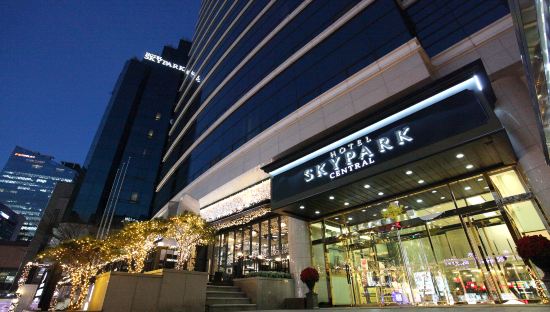
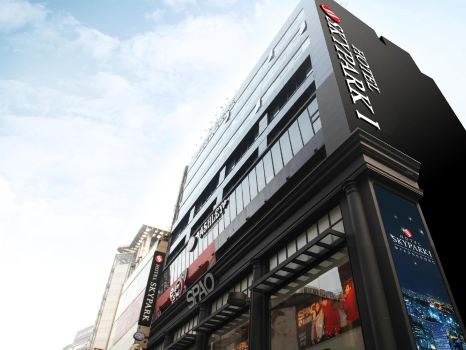
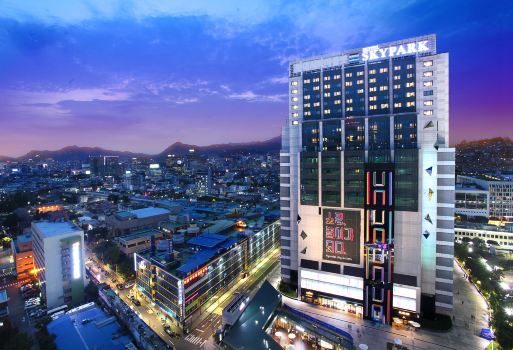
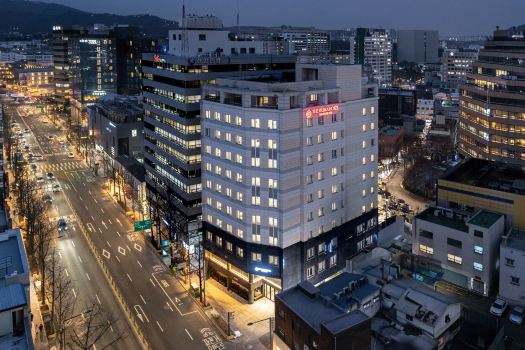
Top Seoul Hotels
Lihat Semua Hotel
 NO.1
NO.1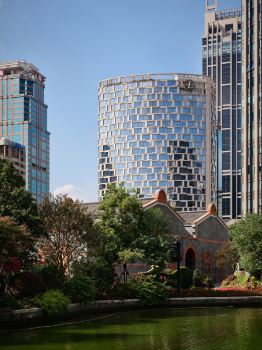

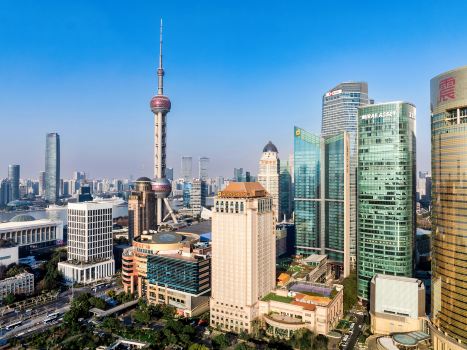
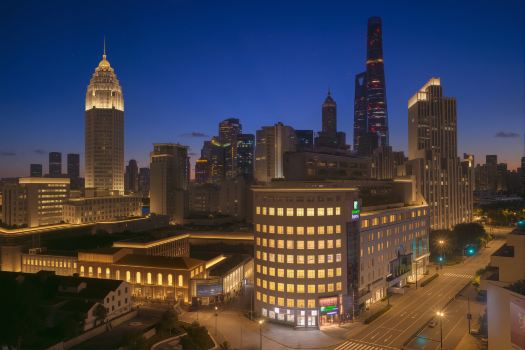
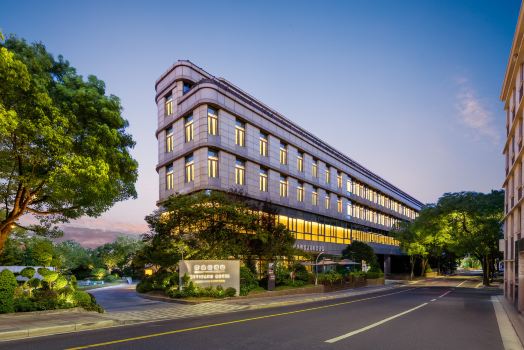

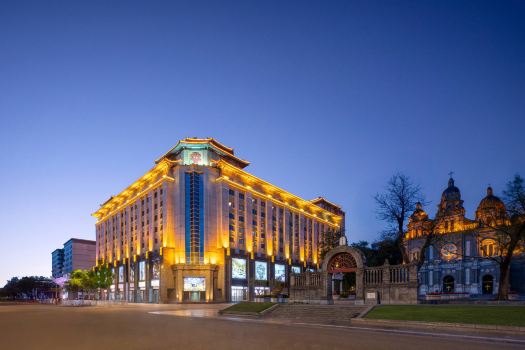
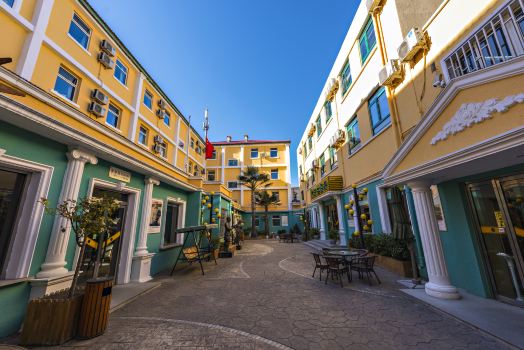
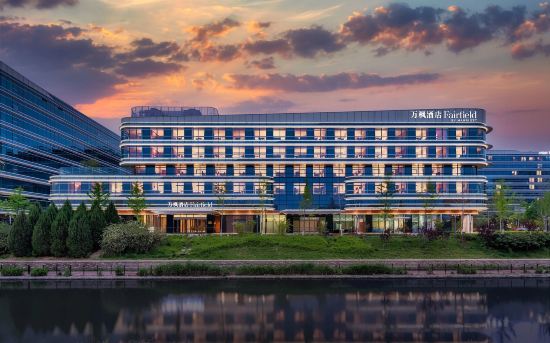
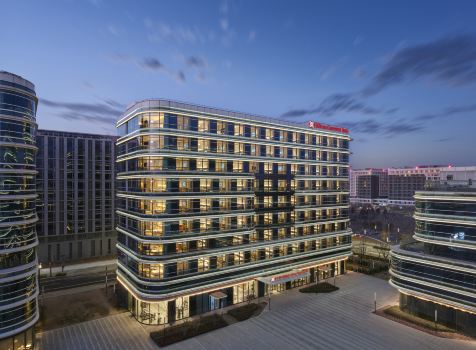


Food costs: Is eating cheaper in China or Korea? 🍜

For comparable local meals, China is usually cheaper.
Current city-level price data places an inexpensive restaurant meal at around CNY 30 in Shanghai, compared with approximately KRW 13,000 in Seoul. Mid-range meals for two also show a substantial difference. Numbeo is a cost-of-living database rather than a tourist-price source, so these figures should be used as background—not as the final travel budget.
Practical daily food budget per person
Eating style | Shanghai | Seoul |
|---|---|---|
Very budget-conscious | RM45–RM70 | RM80–RM115 |
Comfortable local dining | RM80–RM130 | RM130–RM210 |
Tourist-area and café-heavy | RM150+ | RM230+ |
Compare similar meals
A fair comparison might include:
- Convenience-store or bakery breakfast
- Noodles, rice or dumplings for lunch
- Casual local dinner
- One drink or dessert
Do not compare a CNY 10 street breakfast with Korean barbecue for two people.
Shared meals also work differently. Chinese hotpot and family-style dishes may become cheaper per person when shared by a group. Korean barbecue may involve minimum portions, but banchan and shared side dishes add value.
Cafés can reduce the gap. Coffee and desserts in fashionable districts of Shanghai may cost close to Seoul prices.
Halal food costs for Malaysian Muslim travellers ☪️
Muslim travellers should not use the ordinary local-food budget without adjustment.
China
China has long-established Muslim communities and regional halal food traditions. Travellers may see the Chinese term “清真”, commonly used for halal food.
Availability can be better around areas such as:
- Beijing’s Niujie
- Xi’an’s Muslim Quarter
- Muslim neighbourhoods in Guangzhou
- Selected districts in Shanghai
Local noodle shops and Muslim Chinese restaurants may offer good value. However, convenience varies by city and neighbourhood. A hotel far from suitable restaurants may create extra transport costs.
South Korea
The Korea Tourism Organization separates restaurants into categories including:
- Halal Certified: Certified by an accredited halal body.
- Self-certified: The Muslim restaurant owner states that all food is halal.
- Muslim Friendly: Some halal dishes are available; alcohol may be sold.
Therefore, “Muslim Friendly” does not automatically mean the entire restaurant is halal. Travellers should review the category, ingredients and kitchen practices according to their own requirements.
Seoul has a concentration of Muslim-oriented restaurants around Itaewon, while options can be more limited in other areas. Specialised halal restaurants may also charge more than ordinary Korean eateries.
Does halal-only dining change the winner?
Usually, China still has the price advantage, particularly where local Muslim Chinese food is widely available.
The answer can change when:
- The China hotel is far from halal restaurants.
- The traveller uses only premium, tourist-oriented halal restaurants.
- The Korea hotel is within walking distance of suitable Itaewon restaurants.
- The traveller prepares breakfast or snacks independently.
- The itinerary includes Busan, Jeju or smaller destinations with fewer choices.
Muslim travellers should calculate:
Halal meals + transport detours + hotel-location premium + backup snacks
Also remember that a “Muslim-friendly” label is not the same as Malaysia’s JAKIM certification.
Local transport and airport transfers 🚇
Both destinations have efficient public transport, but Chinese city transport is generally cheaper.
Shanghai
Shanghai Metro fares are distance-based, starting at CNY 3 for journeys up to 6 km. Regular downtown buses generally cost CNY 2. The city also supports several tourist-friendly payment methods, including selected international contactless cards and international cards at ticket machines.
Pudong Airport to People’s Square costs around:
- CNY 7 by Metro Line 2
- CNY 50 by Maglev to Longyang Road, before the onward metro journey
- Approximately CNY 180 by taxi, depending on traffic and surcharges
Seoul
The adult Seoul subway base fare is KRW 1,550 with a transport card. A single-journey ticket costs KRW 100 more. Additional distance charges apply after the base range.
Incheon Airport to Seoul Station costs approximately:
- KRW 4,150–4,750 on the AREX all-stop train
- KRW 9,500 on the AREX Express
Daily transport comparison
Transport item | Shanghai | Seoul |
|---|---|---|
Typical central metro journey | CNY 3–6 | KRW 1,550+ |
Four urban journeys daily | About RM8–RM15 | About RM17–RM25 |
Airport rail, one way | About RM4–RM30 | About RM12–RM27 |
Short taxi or ride-hailing trip | Usually cheaper | Usually higher |
First-day setup costs
In Korea, a standard Tmoney card generally costs around KRW 3,000–5,000 before adding travel credit. Refund conditions depend on the balance and refund location.
In China, visitors may use:
- Alipay transport QR
- WeChat Pay
- A city transport card
- Single-journey tickets
- Supported contactless international cards in participating cities
Do not assume that every Chinese city has the same fare or payment process.
Intercity travel: China high-speed rail vs Korea KTX 🚄
This is where China’s price advantage can shrink.
China’s daily costs may be low, but the country is enormous. A Beijing–Xi’an–Shanghai itinerary is not comparable with staying in Seoul for seven days.
Shanghai–Hangzhou
Shanghai–Hangzhou high-speed rail fares vary by train and demand. China Railway’s official pricing notice states that second-class fares on the Shanghai–Hangzhou section use flexible pricing, with certain Shanghai Hongqiao–Hangzhou East fares starting from CNY 48. Travellers should confirm the execution fare on 12306 for their exact train.
Seoul–Busan
A standard KTX seat from Seoul to Busan is commonly listed at around KRW 59,800 one way. Exact schedules and fares should be confirmed on Korail before publication or booking.
At the late-July exchange rate, KRW 59,800 is about RM167 per person, one way.
The important difference
Shanghai–Hangzhou is a short regional journey. Seoul–Busan crosses much of South Korea. They are useful itinerary examples, but not equal-distance routes.
For a fair comparison, include:
- Train ticket
- Booking fee
- Metro or taxi to the station
- Luggage transport
- Hotel-price difference in the second city
- Lost sightseeing time
A multi-city China holiday may still be good value—but route planning matters more than the country’s average price level.
Attractions and tours: which destination costs more to sightsee? 🎟️

Neither country wins every attraction category.
Free or low-cost urban experiences
China:
- The Bund
- Historic streets
- Public parks
- Markets
- Modern shopping areas
- Selected museums
Korea:
- Cheonggyecheon
- Markets
- Han River parks
- Neighbourhoods such as Hongdae and Seongsu
- Bukchon’s public streets
- Selected museums and cultural spaces
Standard paid attractions
These may include:
- Palaces and heritage sites
- Observation decks
- Cable cars
- Museum exhibitions
- Cultural performances
- Scenic areas
Korean palace entry can be relatively inexpensive. China’s major heritage attractions may involve admission tickets, reservation systems and additional internal transport.
High-cost experiences
China can become expensive when the itinerary includes:
- Great Wall day tours
- Private drivers
- English-speaking guides
- Shanghai Disneyland
- Long-distance scenic-area transfers
Korea can become expensive with:
- DMZ tours
- Lotte World or Everland
- Ski trips
- K-pop events
- Guided day trips
- Premium observation decks
A low-attraction itinerary and a theme-park itinerary should never be placed in the same budget category.
Entry and pre-trip setup costs
China
The China–Malaysia mutual visa-exemption agreement allows eligible Malaysian ordinary-passport holders to enter China for applicable purposes, including tourism, for no more than 30 days per entry, with cumulative stays not exceeding 90 days in any 180-day period. Travellers must still meet entry conditions and should verify the latest official guidance before departure.
For a standard short holiday, this generally means:
- Visa cost: RM0
- Passport and entry requirements still apply
- Longer stays or non-tourism purposes may require a visa
South Korea
Malaysian citizens are eligible for visa-free short-term entry for qualifying purposes, but Malaysia is not among the countries listed under Korea’s temporary K-ETA exemption through 31 December 2026. Unless the traveller falls under another exemption—such as the applicable age exemption—a K-ETA is generally required.
The official K-ETA fee is:
- KRW 10,000
- Plus a separate online payment fee
- Assessment is generally completed within 72 hours, although travellers should apply earlier
At the reference exchange rate, KRW 10,000 is approximately RM28 before card and online-payment charges.
Entry rules can change. Check the official eligibility page again before publishing and before flying.
Payment and exchange-rate costs Malaysians often miss 💳
Paying in China
Foreign visitors can link supported international cards, including Visa and Mastercard, to Alipay and WeChat Pay. Bank cards and cash are also legitimate payment options, although acceptance can vary by merchant and location.
Before departure:
- Install Alipay and, where useful, WeChat.
- Complete account and identity verification.
- Bind a Malaysian card.
- Inform the bank about overseas use if necessary.
- Test a small transaction when possible.
- Carry a backup card and some RMB cash.
Potential hidden costs include:
- Malaysian bank foreign-transaction fees
- Currency-conversion spread
- App or card verification problems
- ATM fees
- Dynamic currency conversion
- Failed transactions requiring a different payment method
Some Malaysian e-wallets may also work with participating Chinese merchants, but availability should be checked before relying on them.
Paying in Korea
International credit and debit cards are widely useful for hotels, shops and restaurants. Public transport normally requires Tmoney, EZL or another compatible transport-payment option.
Remember to budget for:
- Initial card purchase
- Cash top-ups where required
- Remaining balance
- Refund fees or restrictions
- Overseas card charges
- ATM withdrawal fees
Korea may require less app preparation, while China may reward travellers who finish their digital-payment setup before flying.
Lihat Semua Tarikan

Hidden costs that can make China or Korea more expensive
Hidden cost | More likely to affect | How to control it |
|---|---|---|
Checked baggage | Both | Compare the final fare, not the headline price |
Airport transfer | Both | Check the airport and arrival time |
Seat selection | Both | Include it only when genuinely needed |
K-ETA | Korea | Use only the official platform |
Hotel breakfast | Both | Compare room-only and breakfast-inclusive totals |
Tourism-zone hotel premium | Both | Stay one or two metro stops outside the core |
High-speed rail or KTX | Both | Build the route before choosing the country |
Domestic flights | China more often | Group nearby cities into one region |
Theme parks | Both | Keep them in a separate experience budget |
Guided tours | China more often | Compare public transport and group tours |
Halal restaurant detours | Both | Choose accommodation near suitable food |
Winter clothing | Korea often; northern China too | Borrow or buy in Malaysia before travelling |
Luggage storage | Both | Check hotel storage policies |
Mobile data | Both | Compare total data and validity |
Card exchange fees | Both | Use a low-fee card where available |
Transport-card balance | Korea | Top up in smaller amounts |
Shopping | Both | Exclude it from the base travel budget |
Concert tickets | Korea more often | Treat as discretionary spending |
Tax refunds | Both | Compare net spending after eligibility and fees |
Which country is cheaper for your travel style?
Budget solo traveller 🎒
China usually wins.
Hostels, local food and public transport generally cost less. The difference becomes especially noticeable on longer trips, provided the itinerary stays within one region.
Couple 💑
China normally remains cheaper, but the per-person hotel difference shrinks because the room is shared.
Food style, cafés, attractions and flights become more important than the room rate.
Family with children 👨👩👧👦
China may offer cheaper meals and ride-hailing, but families must check:
- Whether one room accepts four guests
- Whether two rooms are required
- Extra-bed charges
- Child-ticket rules
- Walking distances
- Language support
- Theme-park spending
A cheaper hotel that requires two rooms may no longer be cheaper.
Malaysian Muslim traveller ☪️
China often provides better-value local halal food, but only when the itinerary is built around areas with suitable restaurants.
Recalculate the budget using halal-only meal samples and transport detours. Do not reuse the standard food estimate.
K-pop and K-beauty traveller 🎤
Korea’s base travel cost may not be dramatically higher during a flight promotion. However, merchandise, albums, skincare, cafés, concerts and pop-up stores can easily exceed the basic travel budget.
Keep a separate shopping wallet.
Multi-city traveller 🚄
Route design matters more than the national average.
China’s cities are farther apart, so a poorly planned multi-city journey can remove much of its daily cost advantage.
First-time East Asia traveller 🌏
Korea may offer a more familiar card-and-transport-card experience. China can provide lower everyday spending but may require additional app, payment and translation preparation.
The decision is partly about value versus convenience, not price alone.
Common mistakes when comparing China and Korea travel costs
1. Comparing all of China with Seoul
Use specific city pairs such as Shanghai–Seoul or Beijing–Seoul.
2. Comparing different seasons
Search the same dates. Do not compare China in February with Seoul during cherry-blossom season.
3. Comparing a direct flight with a long layover
Match flight duration, baggage and number of stops.
4. Ignoring baggage and airport transport
Use the full door-to-door cost.
5. Comparing multi-city China with Seoul only
Create separate one-city and two-city models.
6. Including shopping only for Korea
Exclude shopping from both base budgets.
7. Using ordinary meal prices for Muslim travellers
Build a separate halal-food sample.
8. Using cost-of-living data as tourist prices
Cost-of-living databases are useful background, but real tourist budgets need current hotels, flights, transport and attractions.
9. Ignoring room occupancy
Calculate solo, couple and family costs separately.
10. Publishing dynamic prices without dates
Every airfare and hotel table should say:
Prices checked on [date] for travel on [dates].
China vs Korea budget calculator and checklist 🧮
Use this formula:
Total trip cost = return flight + accommodation + food + local transport + airport transfer + intercity transport + attractions + entry administration + connectivity + payment fees + contingency
Fill in:
Budget item | Your amount |
|---|---|
Departure airport | |
Travel dates | |
Number of travellers | |
Number of nights | |
Cities | |
Return flights with baggage | RM |
Hotel total with taxes | RM |
Meals per day | RM |
Halal-only adjustment | RM |
Local public transport | RM |
Airport transfer | RM |
Long-distance trains | RM |
Attractions and tours | RM |
eSIM or roaming | RM |
K-ETA, when required | RM |
Payment and exchange fees | RM |
10% contingency | RM |
Final total | RM |
Before booking, check that you have:
- Used the same travel dates.
- Included taxes and service charges.
- Added checked baggage.
- Confirmed hotel occupancy.
- Excluded shopping from the base comparison.
- Recorded the exchange-rate date.
- Checked Chinese public holidays.
- Checked Korean cherry-blossom and autumn peaks.
- Verified the latest K-ETA requirement.
- Tested your China payment apps.
- Calculated halal-food transport detours.
- Added a 10% emergency buffer.
Conclusion: Is China or Korea cheaper for Malaysian tourists?
The answer has three levels:
- Ground costs: China usually wins.
- Total short-trip cost: It depends on flights and city choice.
- Best value for you: It depends on your itinerary, halal requirements and shopping habits.
China is usually the cheaper option for Malaysian travellers who want affordable local meals, transport and a longer trip. South Korea can be similarly priced for a short Seoul holiday when flights are on sale and the itinerary stays within one city.
Before booking, compare the same dates, baggage allowance, hotel standard and number of cities—and keep shopping outside the base budget. ✅
Price-check note: Exchange rates checked against late-July 2026 references. Airfare snapshot checked on 31 July 2026 for travel from 12 to 19 October 2026. Hotel, restaurant and attraction prices should be refreshed before publication.
FAQ
-
Is China cheaper than South Korea for tourists?
-
Is Shanghai cheaper than Seoul?
-
Is Beijing cheaper than Seoul?
-
Is food cheaper in China or Korea?
-
Is halal food cheaper in China or Korea?
-
Are hotels cheaper in China or Korea?
-
Is public transport cheaper in China or Korea?
-
Is RM3,000 enough for seven days in China?
-
Is RM3,000 enough for seven days in Korea?
-
Do Malaysians need a visa for China?
-
Do Malaysians need K-ETA for Korea?
-
Which is cheaper for families, China or Korea?
-
Which is cheaper for shopping, China or Korea?
-
Can a Seoul flight deal make Korea cheaper?
Disclaimer: This article has been provided by an individual contributor or third party platform. If there is any discrepancy regarding the copyright, please contact us directly and we will delete the content immediately.