
Zhangjiajie Tourist Map
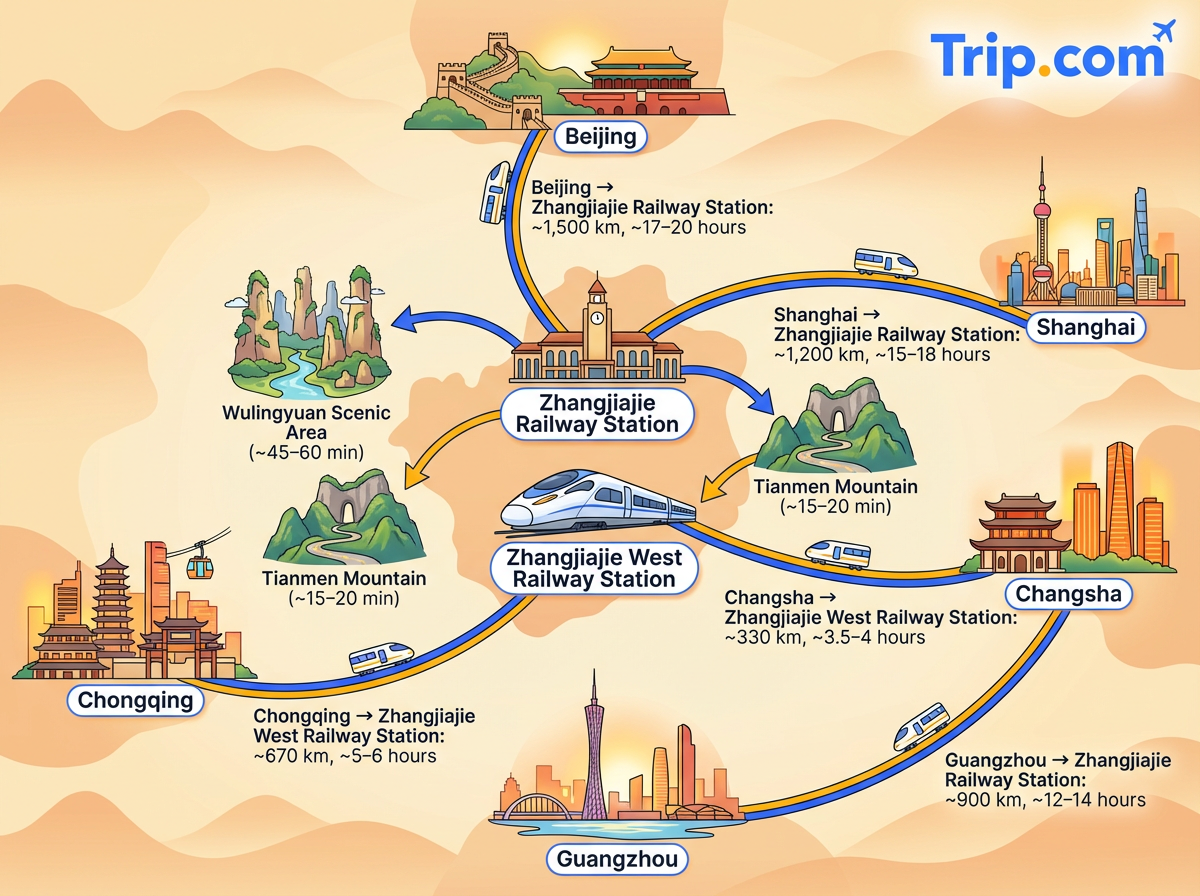
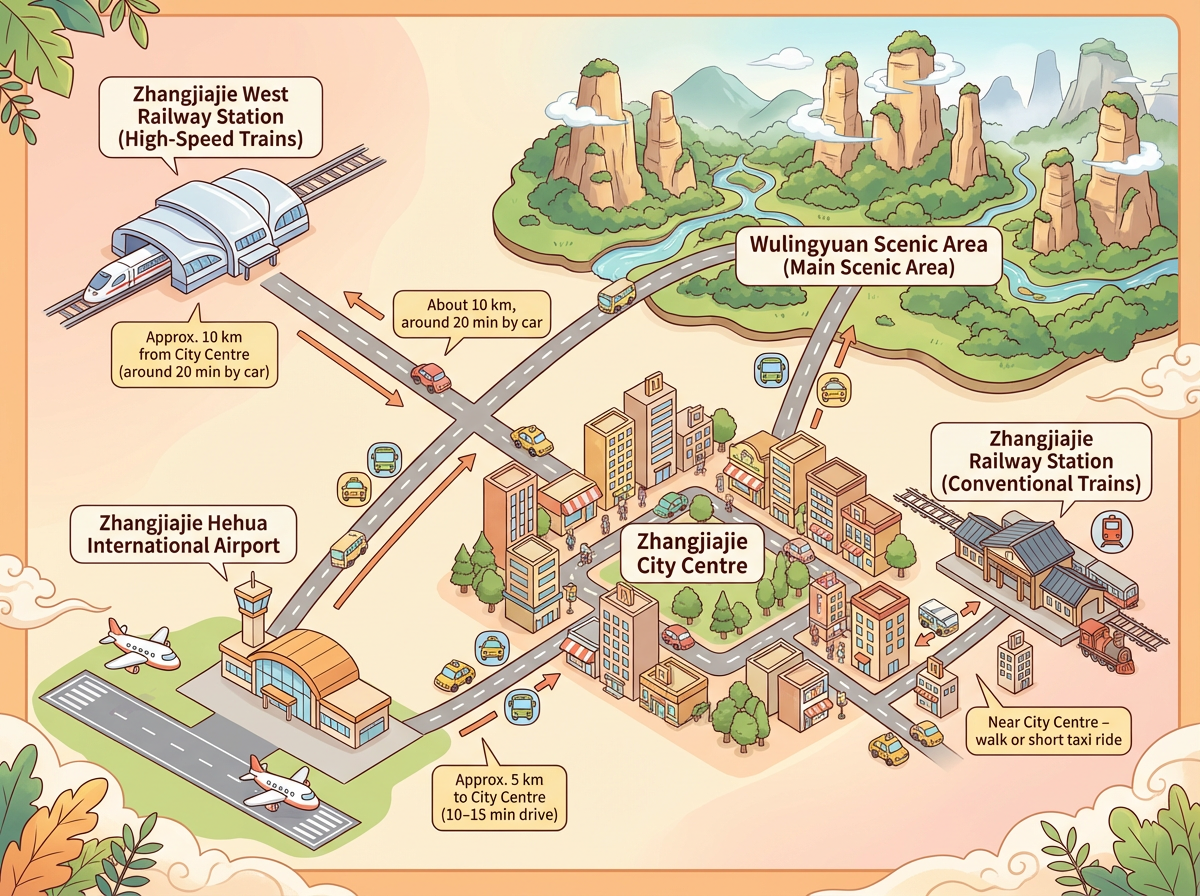
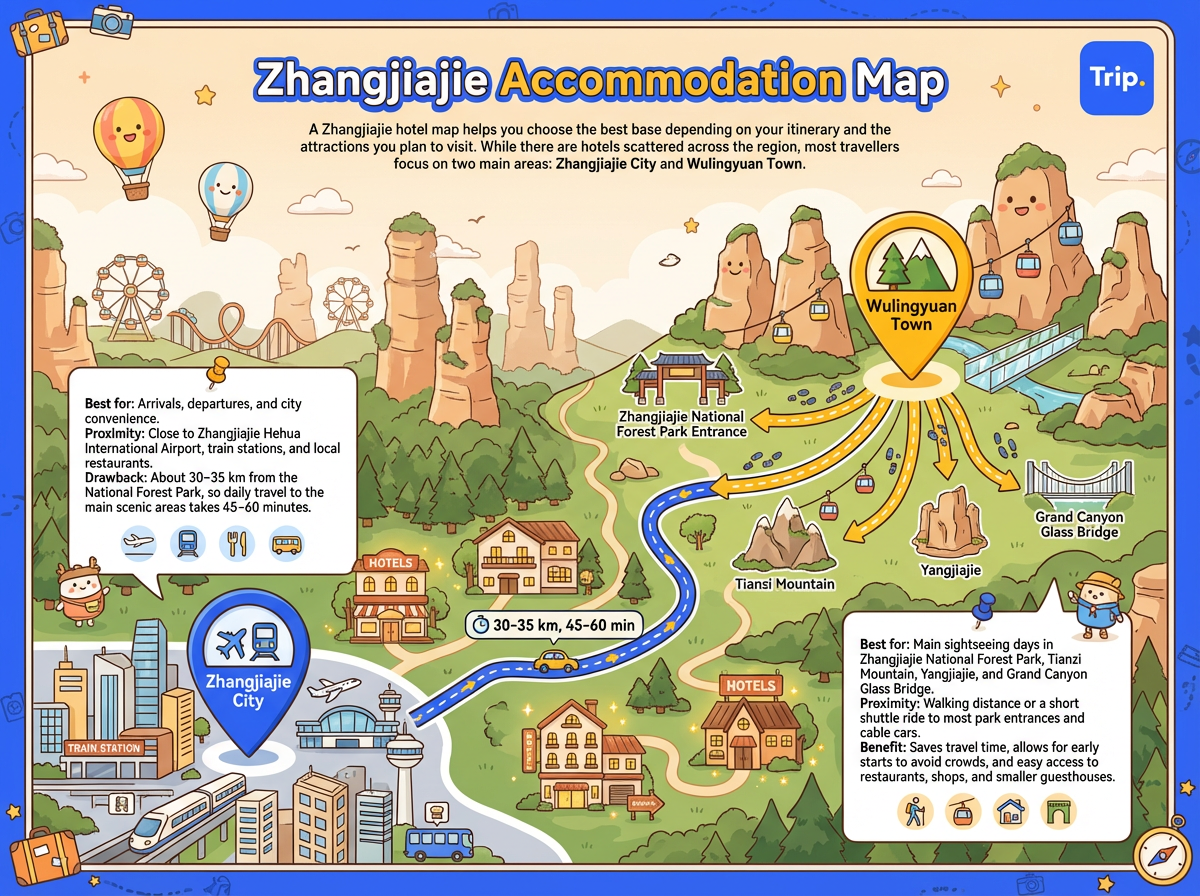
Tianmen Mountain is located right next to Zhangjiajie City, close to the airport and railway stations. The most famous sights, including Zhangjiajie National Forest Park, Yuanjiajie, and Tianzi Mountain, are all within the Wulingyuan Scenic Area, about 30–35 km north of the city (around 45–60 minutes by car). Wulingyuan Town sits beside the park entrances and is the best base for exploring these areas. The Zhangjiajie Grand Canyon and Glass Bridge lie further east of Wulingyuan, roughly 30-40 km away, and are usually visited as a separate half-day or full-day trip.
Wulingyuan Scenic Area Map
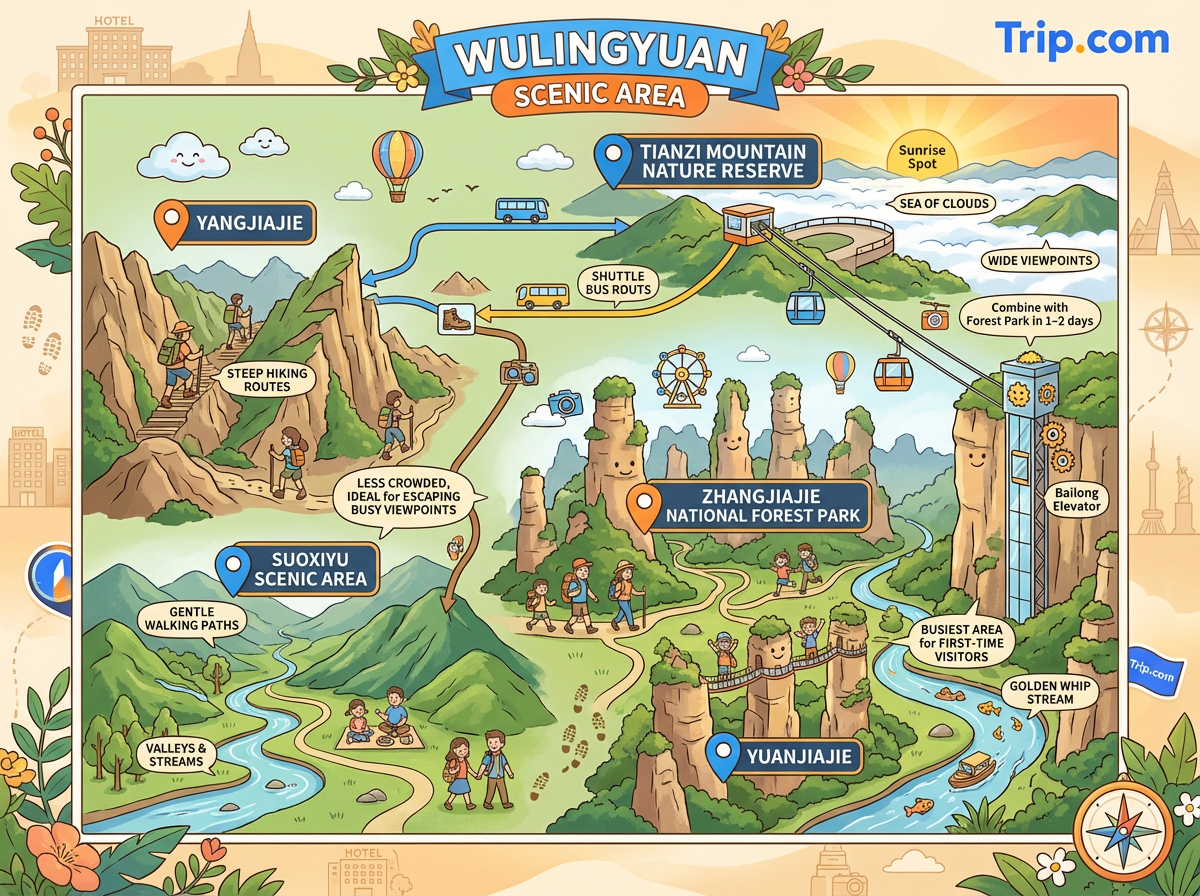
Rather than being a single park, Wulingyuan is a vast protected area made up of several connected scenic zones, all linked by internal shuttle buses, hiking trails, and cable cars.
At the heart of the map is Zhangjiajie National Forest Park, the most visited section and home to the iconic sandstone pillars that inspired the Avatar landscapes. This area includes highlights such as Yuanjiajie, Golden Whip Stream, and the Bailong Elevator, and is where most first-time visitors spend the bulk of their time.
To the north of the forest park on the map, you’ll find Tianzi Mountain Nature Reserve, known for its expansive vistas, sea-of-clouds scenery, and stunning sunrise spots. Tianzi Mountain is connected to the forest park by shuttle buses and a cable car, making it easy to combine both areas in just a day or two.
On the western side of the Wulingyuan map lies Yangjiajie, a quieter area with steeper hiking routes and dramatic ridgelines. Nearby is the Suoxiyu Scenic Area, which features valleys, streams, and gentler walking paths. These two areas are less crowded and ideal if you want to escape the busiest viewpoints while still staying within the Wulingyuan Scenic Area.
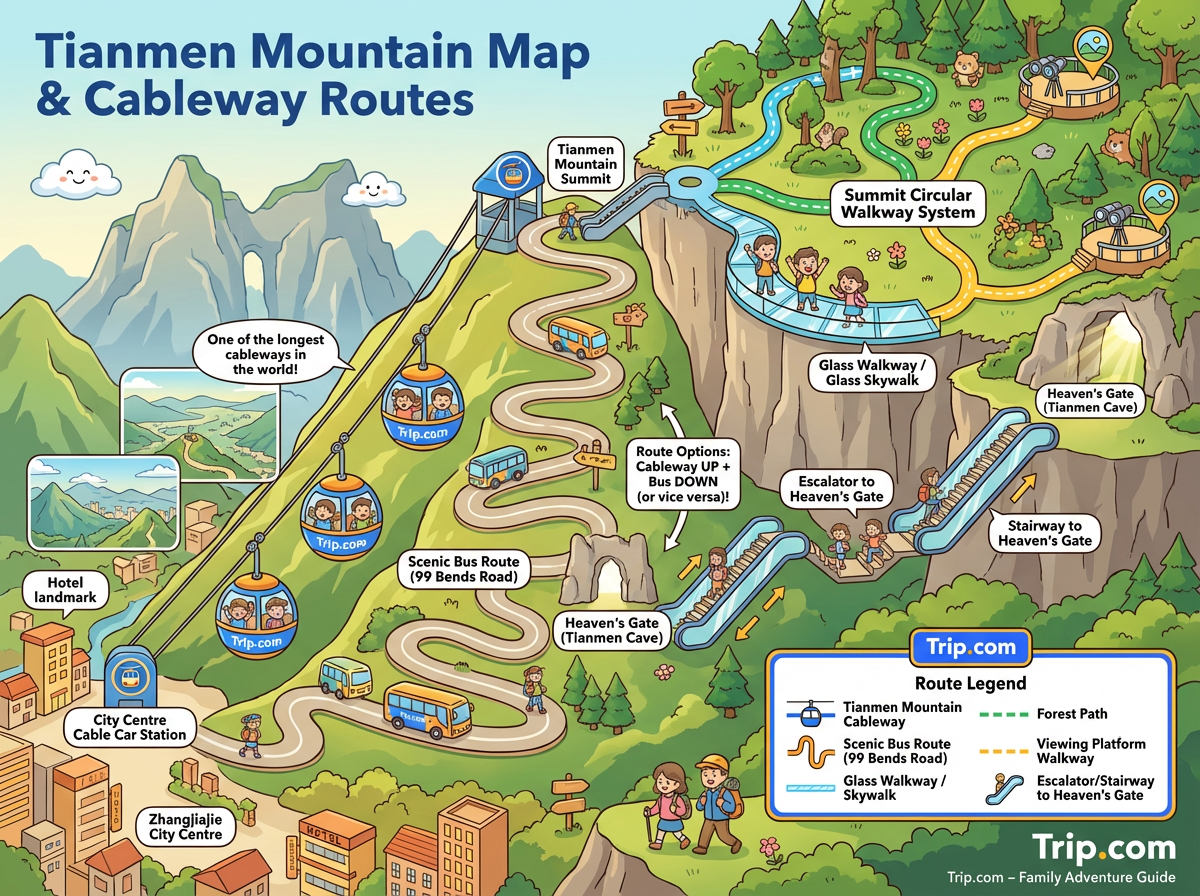
Tianmen Mountain Map & Cableway Routes
The mountain sits right next to Zhangjiajie City, and the map clearly shows two main ways to reach the summit: by cable car or by scenic bus.
The most famous route marked on the map is the Tianmen Mountain Cableway, which runs directly from the city center up to the mountain top. It’s one of the longest cable car rides in the world and offers sweeping views as you ascend.
The alternative route uses a scenic bus that climbs the mountain via the legendary 99-bend mountain road, stopping near Heaven’s Gate (Tianmen Cave) before continuing to the upper areas. On some ticket types, you’ll go up one way and come down the other, which the map helps clarify at a glance.
Once you reach the top, a circular walkway system connects the cliff-edge glass paths, forest trails, and scenic viewing platforms. As you explore, be sure to follow the color-coded routes on your map and keep in mind that the popular glass sections can get a bit busy, so plan for some wait times. You’ll find Heaven’s Gate marked as a distinct area just below the summit, which you can reach via a long escalator or a flight of stairs.
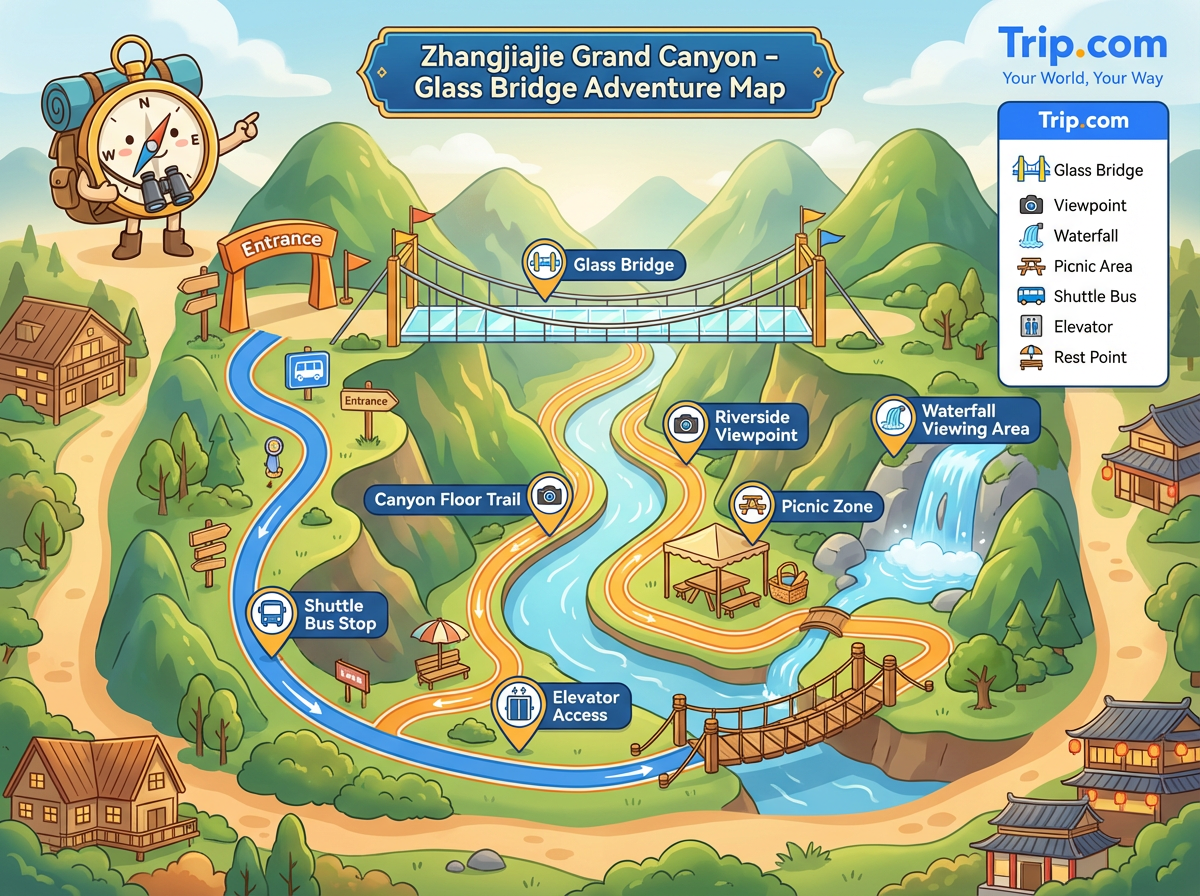
Zhangjiajie Grand Canyon & Glass Bridge Map
The Zhangjiajie Grand Canyon map shows the layout of one of the most thrilling attractions in the region, centered around the Glass Bridge.
From the entrance, paths lead visitors along well-marked trails that connect the canyon floor, riverside viewpoints, and the suspension bridge itself. The Glass Bridge spans the canyon, offering spectacular aerial views of the cliffs and river below.
Other great features to look for on the map include scenic waterfall viewpoints along the side trails, perfect picnic areas, and convenient access points for shuttle buses or elevators.
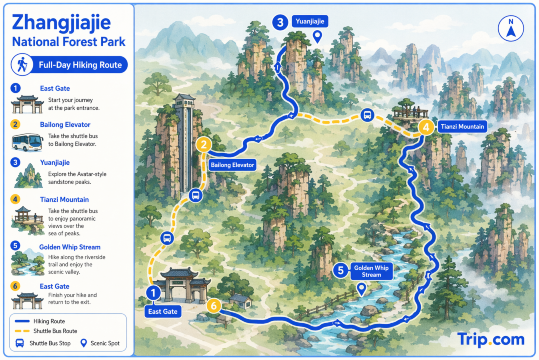
Recommended Hiking Trail Map (1-Day Core Loop)
A practical full-day hiking route in Zhangjiajie National Forest Park starts at the East Gate and takes the shuttle bus up to the Bailong Elevator, then continues to Yuanjiajie to explore the Avatar-style sandstone peaks. From there, proceed by shuttle to Tianzi Mountain for panoramic viewpoints over the “sea of peaks.” In the afternoon, descend gradually and finish with a relaxed walk along the Golden Whip Stream, following the riverside trail back toward the exit. This route combines cable transport and hiking efficiently, covering the park’s most iconic landscapes without unnecessary backtracking.